

About Microsoft Azure Network
The Microsoft Azure Network source reads virtual network layout, network security groups, Azure Firewall policy, route tables, load balancers, and public IP configuration from your subscription through Azure Resource Manager. Authentication is delegated OAuth 2.0 (Microsoft Entra ID) as the user who completes the wizard. Iru does not change network resources. For subscription-wide visibility, assign Reader at subscription scope. Roles granted only on individual resource groups can hide resources outside those groups.How It Works
Iru uses Microsoft’s OAuth 2.0 authorization code flow against Azure Resource Manager. The requested scope is:https://management.azure.com/user_impersonation
What Iru collects
The built-in Reader role at subscription scope includes
Microsoft.Network/*/read for these resource types (no write permissions).
Official references: Virtual Network documentation, Network security groups, Networking built-in roles, Network REST API.
Prerequisites
- Microsoft Entra ID sign-in to the Azure portal.
- Reader (or higher) on the subscription you connect. Assign at subscription scope for full inventory.
- Browser pop-ups allowed so the connector wizard can open when you enable the source.
Connect Microsoft Azure Network to Iru
Use Microsoft Azure first to confirm portal access and Reader coverage on the subscription, then complete OAuth in Iru Compliance. The wizard shows Step 1 of 1: Perform OAuth Authentication.- Microsoft Azure
- Iru Compliance
Complete this tab before you start OAuth in Iru Compliance.
1
Sign in to the Azure portal
Open portal.azure.com and sign in with the account you will use in the Iru wizard.
2
Open your target subscription
Search for Subscriptions, then open the subscription whose virtual networks, NSGs, and related networking resources Iru should read.
3
Verify Reader access
Open Access control (IAM) → View my access. Confirm Reader (or equivalent read) at subscription scope, per Prerequisites.
4
Allow pop-ups in your browser
Allow pop-ups for your Iru hostname so the Microsoft consent window can open.
5
Plan for the right Microsoft Entra ID tenant
If you use multiple tenants, use a clean browser session so OAuth signs in to the tenant that owns the subscription.
Continue on the Iru Compliance tab.
Troubleshooting
Nothing opens when you turn the source on
Nothing opens when you turn the source on
Check pop-up blocker settings for the Iru site and try again.
Empty or partial network inventory
Empty or partial network inventory
Confirm Reader is assigned at subscription scope if you expect a full subscription view. Reader scoped only to a resource group may omit resources in other groups.
Wrong Microsoft Entra tenant
Wrong Microsoft Entra tenant
Sign out of the Microsoft pop-up and sign in with the account for the correct tenant.
Broken status
Broken status
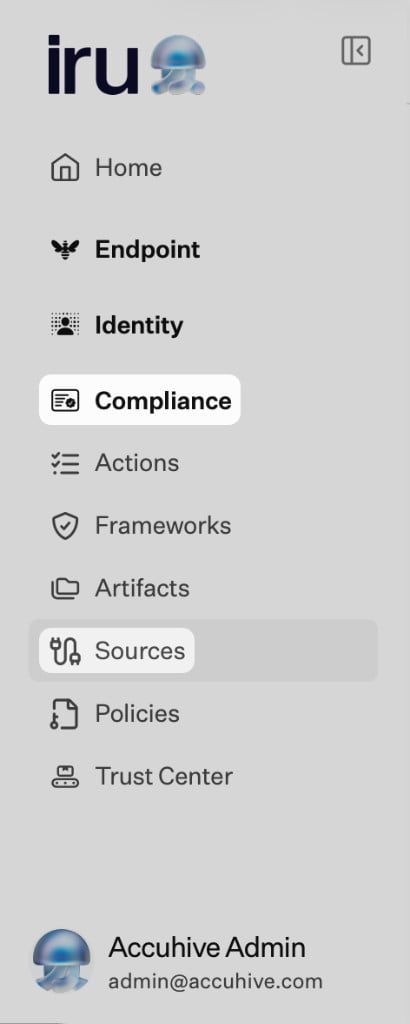
Turn Microsoft Azure Network off and on in Sources, then complete OAuth again.
Related Articles
Sources Management
Browse and manage every Compliance source.
Getting Started With Compliance
Frameworks, actions, and Artifacts.
Iru Overview
How Endpoint, Compliance, and Identity fit together.
Artifacts Management
Upload, review, and organize evidence from sources and actions.