

Configure Directory Integration
1
Open Integrations
In the sidebar, select the Account Menu Button, then select Integrations.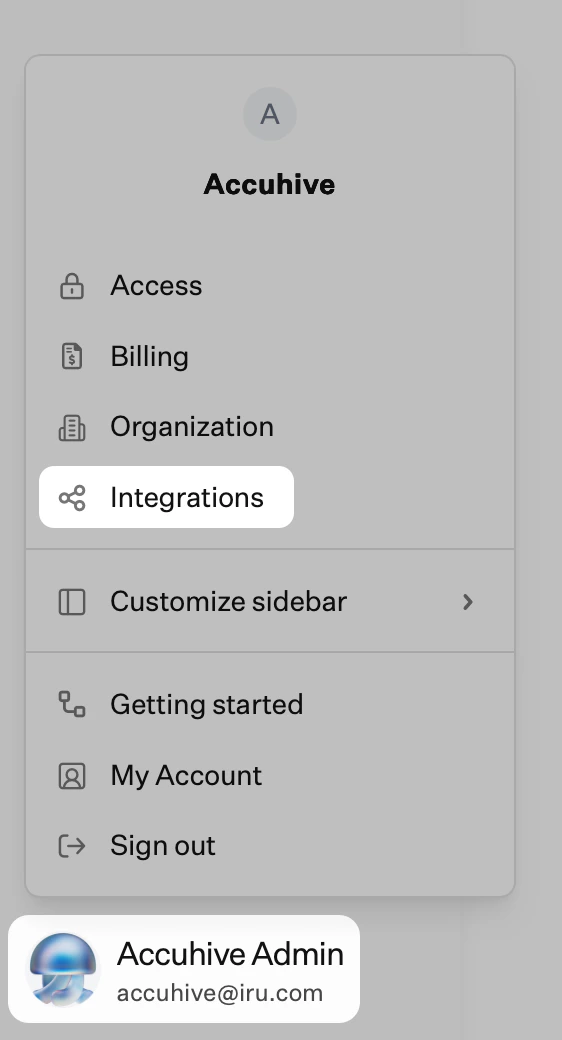
2
Browse all integrations
Select Browse all integrations in the upper-right of the Integrations page.
3
Select a directory integration
Select the Microsoft Entra ID, Google Workspace, or SCIM protocol tile for the directory you want.
4
Complete the provider configuration
Follow the on-screen setup (e.g., Get started, integration name, sign-in with your IdP). Complete consent or Allow as prompted so the directory appears on the Integrations page.
5
Verify user sync
Users sync automatically every four hours. Verify users appear under Users in Iru Endpoint; you can force a sync from the ellipsis on the integration → Sync users.
Supported Directory Integrations
Iru Endpoint supports the following directory integrations:- Microsoft Entra ID: Native integration for Microsoft Entra ID (formerly Azure AD).
- Google Workspace: Native integration for Google Workspace.
- SCIM Integration: For providers like Okta, OneLogin, JumpCloud.
Benefits
- User-Device Mapping: Automatically associate devices with users.
- Inventory Management: Better tracking of who has which device.
- Automated Assignment: Devices can be automatically assigned to users.
- Compliance Reporting: Richer reporting with user context.
Considerations
Optional but recommended
Directory integration is optional but recommended for better inventory management. Device users in Iru Endpoint can only be created and assigned via a directory integration.
User sync
Users appear under Users once synced. Microsoft Entra ID and Google Workspace sync automatically every four hours.
SCIM provisioning
SCIM allows Just-in-Time provisioning and de-provisioning. See SCIM Directory Integration for setup.
Admin access
Integration requires an account with admin access to the directory you want to integrate.
Next Steps
After configuring directory integration:1
Set up platform integrations (one or more)
Set up the platforms you plan to manage. You can enable one, two, or all three:
- Apple Setup: Configure APNs, Apple Business or Apple School Manager, and Apps and Books
- Windows Setup: Enable the Windows platform and configure settings
- Android Setup: Enable Android and configure Android Enterprise
2
Configure Blueprints and Library
Use Configuring Blueprints and Managing Library to get policies and apps ready before enrollment.
3
Set up enrollment for each platform
Once Blueprints are configured, set up Apple Enrollment, Windows Enrollment, or Android Enrollment.