This guide applies to Android devices
Set up the Android Enterprise integration so you can enroll and manage Android devices with work profiles from one platform. Enable Android in Organization settings and configure Android Enterprise (Google); then configure Blueprints and Library, then set up enrollment. Iru Endpoint uses the Android Management API for company-owned work profile management.

Prerequisites

Before you begin, ensure you have:
  • Super admin access to your organization’s Google Admin console (learn more about super admin roles)
  • Company-owned devices in factory reset state for enrollment
  • Android 13 and higher
  • Third-party Android mobile Management enabled in Google Workspace (see steps below)

Enable third-party Android mobile Management in Google Workspace

1

Sign in to Google Admin console

In a web browser, use your organization’s super administrator account to sign in to your organization’s Google Admin console at admin.google.com.
2

Open Third-party integrations

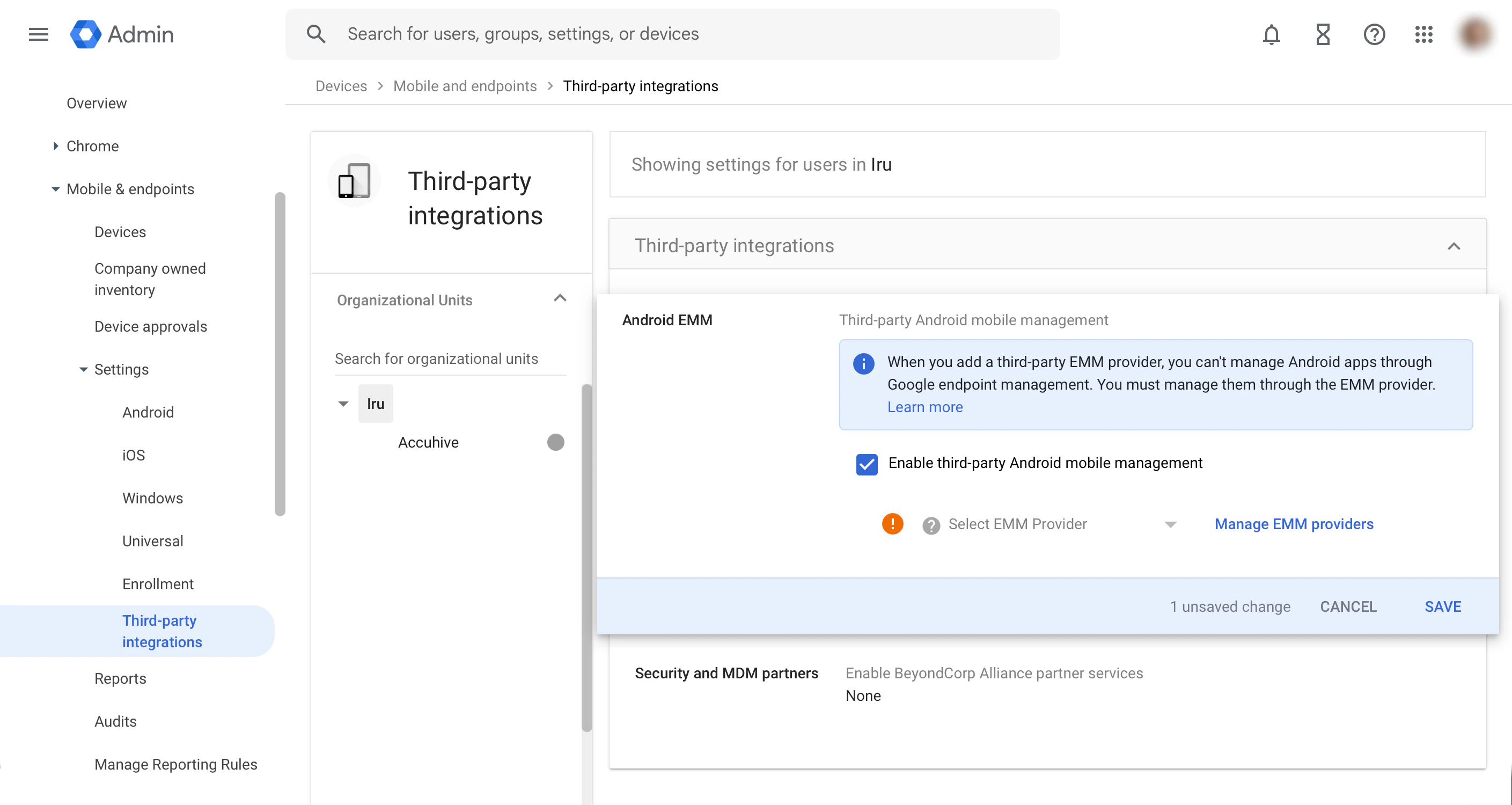
Go to DevicesMobile & endpointsSettingsThird-party integrations.
3

Select organization unit and Android EMM

Select the related organization unit, then select the Android EMM block.
4

Enable and save

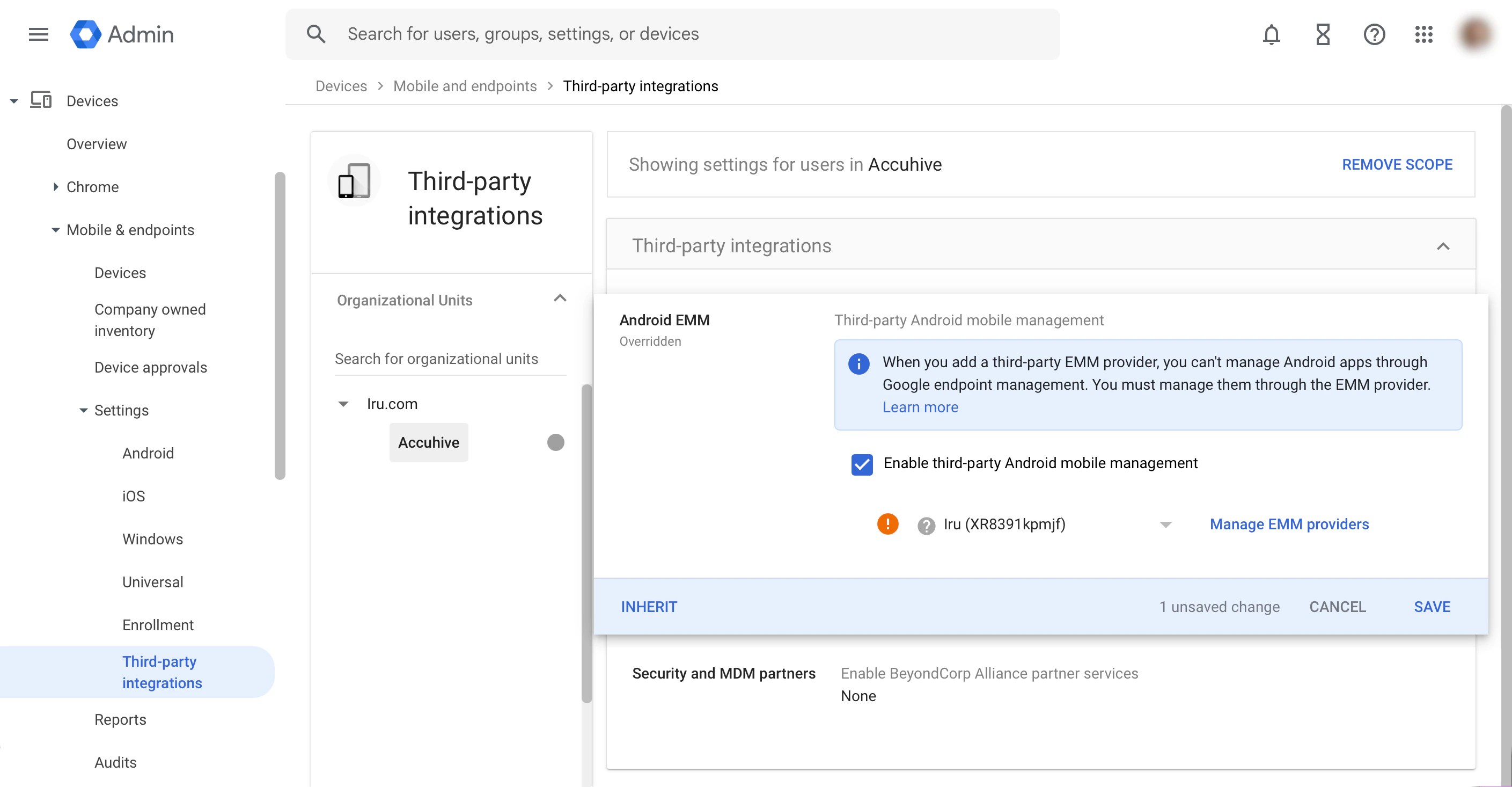
Check the box for Enable third-party Android mobile management, then click SAVE.
Third-party integrations in Google Workspace showing Android EMM and Enable third-party Android mobile management

Enable Android platform

Only users with the Account Owner role can enable or disable platforms. See Team Member Role Permissions for more details.
1

Navigate to the Account Menu Button

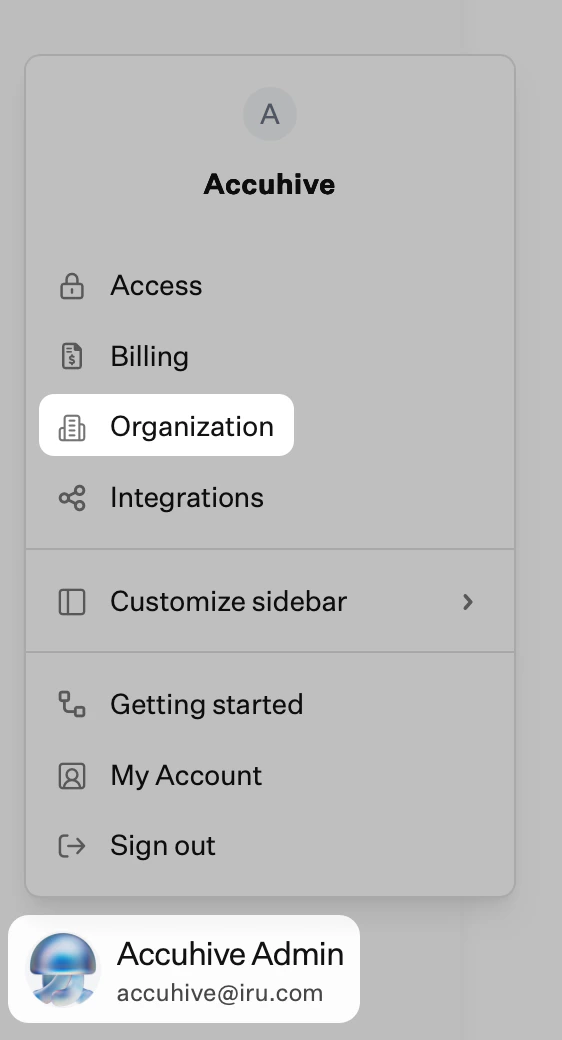
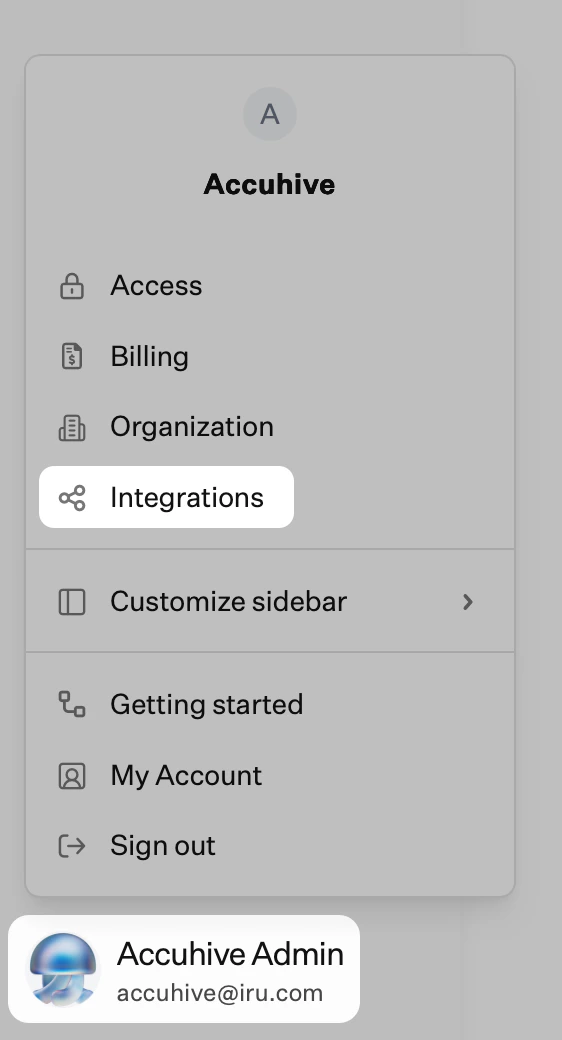
In Iru Endpoint, in the sidebar, click the Account Menu Button.
2

Open Organization profile

Click Organization in the menu.
Screenshot of the account menu with Organization option highlighted
3

Open the Endpoint tab

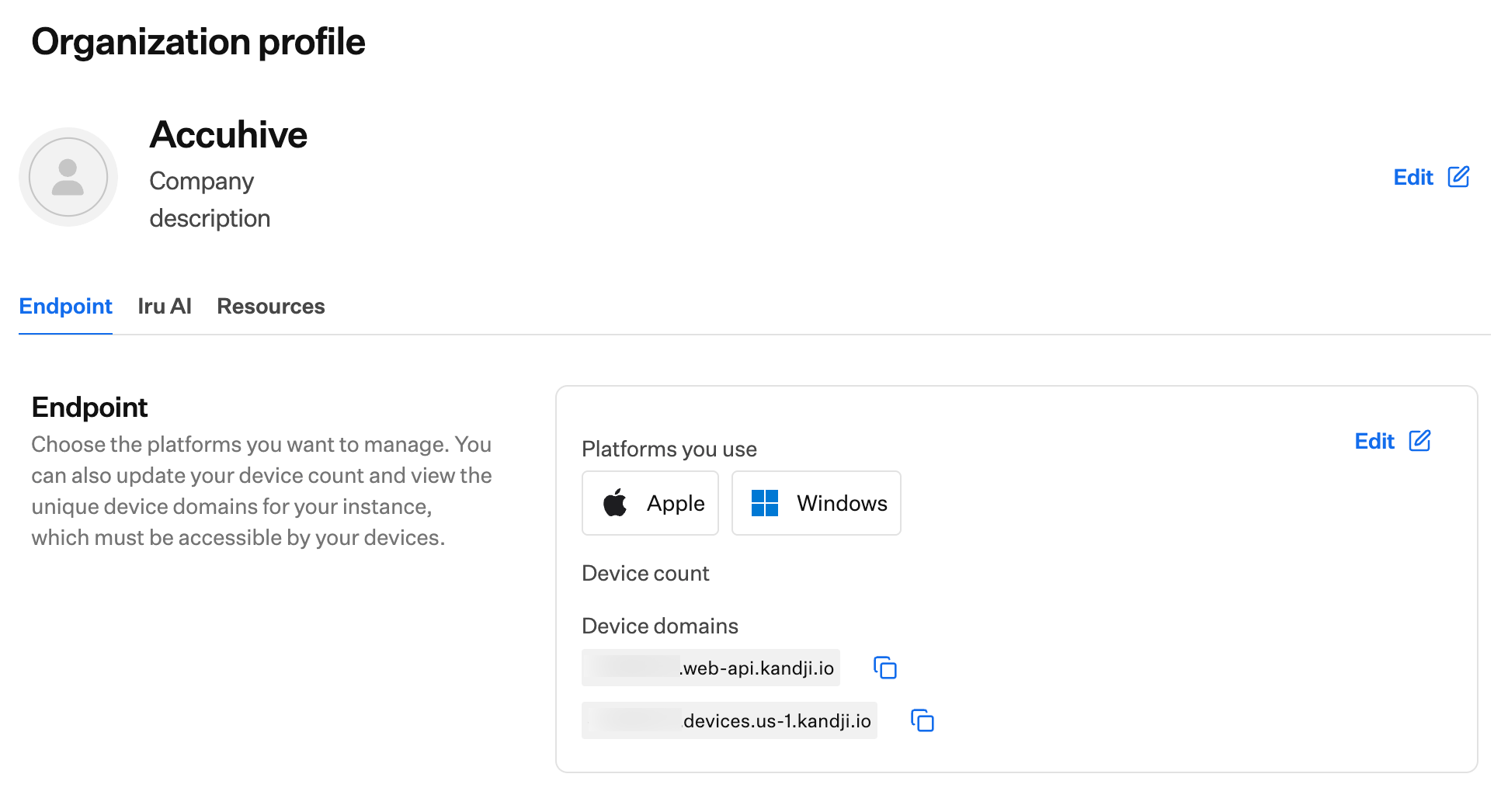
Select the Endpoint tab.
4

Edit platforms

Under Platforms you use, click Edit.
Screenshot of the Organization Endpoint tab showing Platforms you use and Edit button
5

Select Android and click Save changes

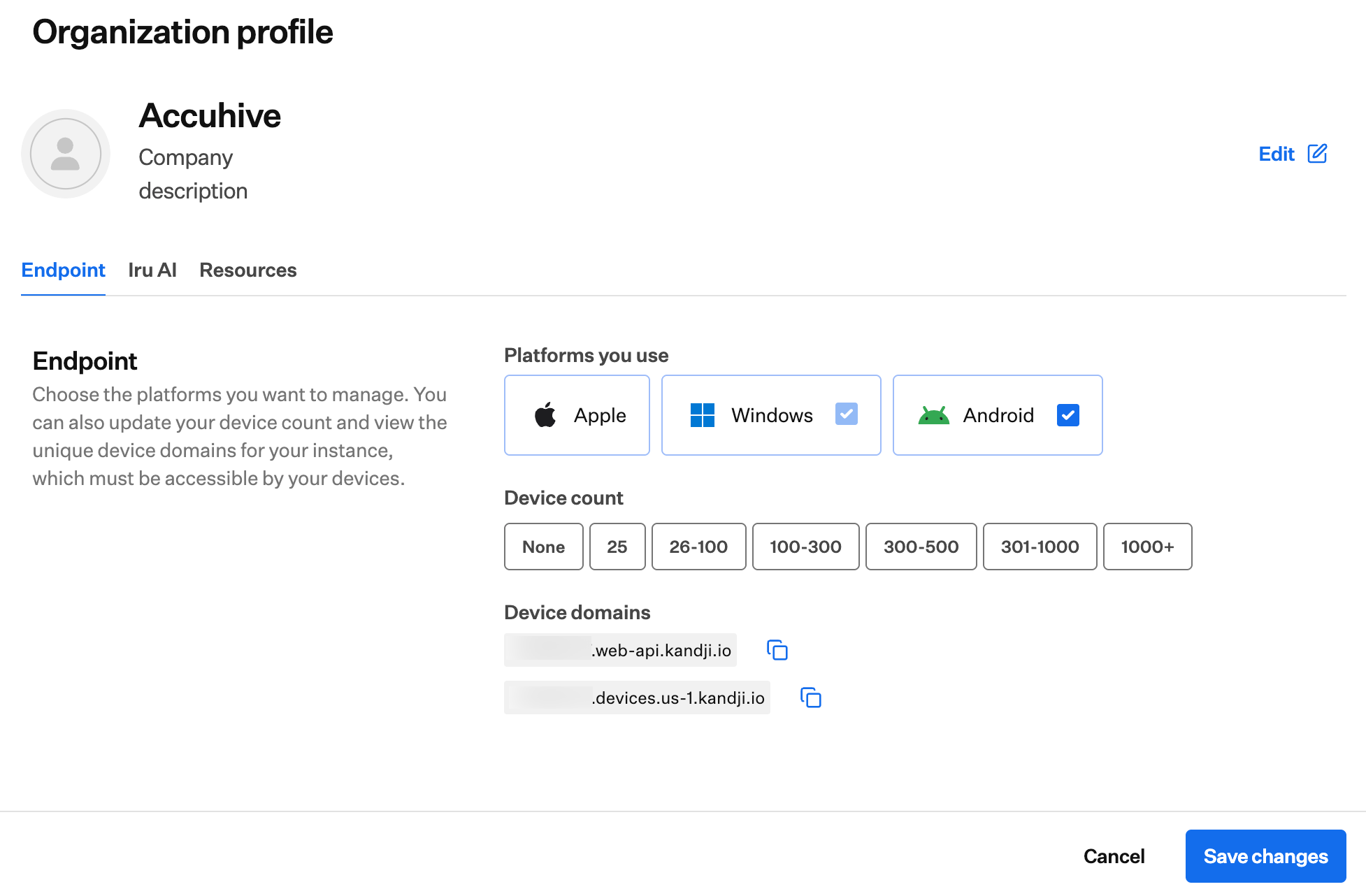
Select Android (and optionally Windows if you plan to manage both platforms), then click Save changes at the bottom of the page.
Screenshot of the platform selector with platform options and Save changes button
You can optionally enable the Windows platform at the same time when selecting platforms.

Configure Android Enterprise

If the Configure Android Enterprise window is not open, go to Account Menu ButtonIntegrations, select Android under Platform integrations, then click Configure Android Enterprise.
Only the Account Owner can configure Android Enterprise. See Team Member Role Permissions for roles and permissions.
1

Enter integration name

Enter a name for your Android Enterprise integration.
2

Sign in with Google

Click Continue with Google and sign in with your Google Admin account (super admin role required). Select Next when prompted (your Iru Endpoint admin email may be pre-filled).
3

Allow device management

Select Allow to allow Iru Endpoint to manage your Android devices.
4

Configure work profile sign-in

Choose how users sign in to the work profile: select Enable to allow users to sign in with their managed Google account, or select Skip to prevent sign-in with a managed Google account in the work profile.
5

Return to Integrations page

You will be redirected back to the IntegrationsAndroid page.
6

Verify integration

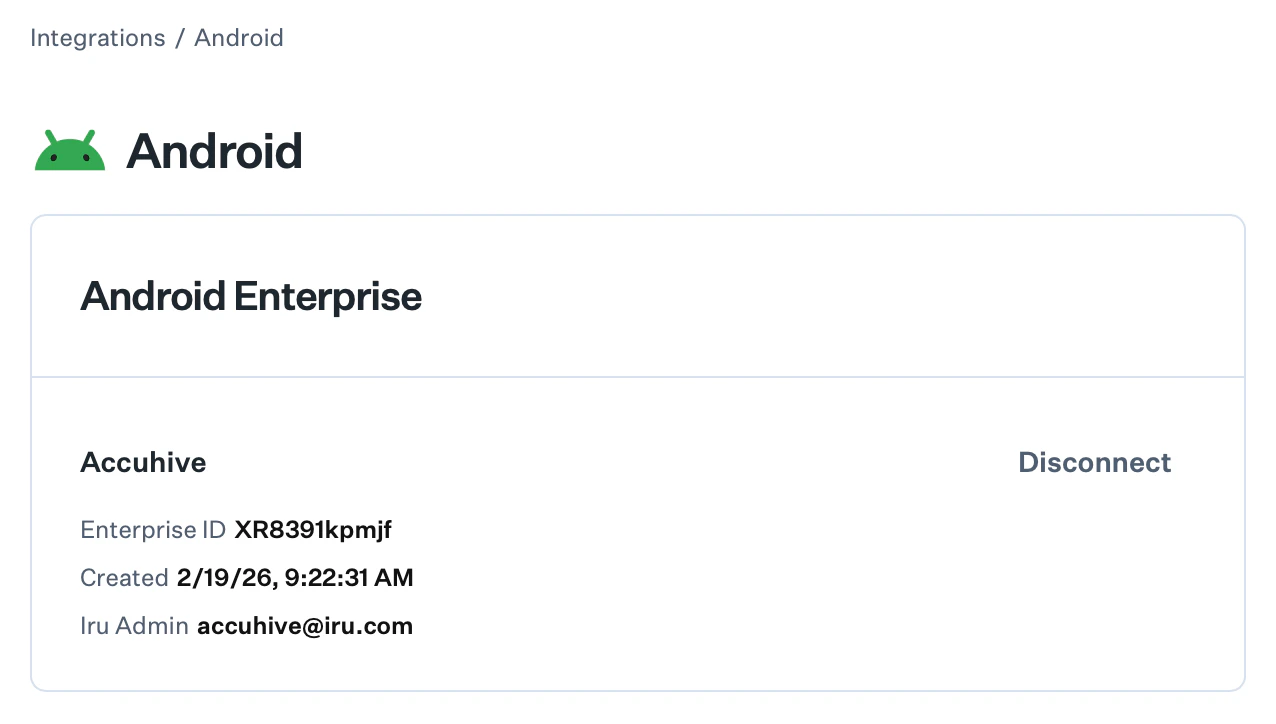
Verify that the Android Enterprise integration is active and configured.
Android Enterprise integration complete in Iru showing active integration
Keep a note of the Enterprise ID shown here; you will use it in the next section when selecting the EMM provider in Google Workspace.

Set EMM in Google Workspace

After configuring Android Enterprise in Iru, return to Google Workspace and select the EMM that matches the Enterprise ID shown in Iru. This links your Google organization to the Iru Endpoint Android integration.
1

Sign in to Google Admin console

In a web browser, use your organization’s super administrator account to sign in to your organization’s Google Admin console at admin.google.com.
2

Open Third-party integrations

Go to DevicesMobile & endpointsSettingsThird-party integrations.
3

Select organization unit and Android EMM

Select the related organization unit, then select the Android EMM block.
4

Select the EMM that matches Iru

Enable third-party Android mobile management if not already enabled, then select the EMM that matches the Enterprise ID from your Iru Endpoint Android integration.
5

Save

Click SAVE.
Selecting the EMM in Google Workspace that matches the Enterprise ID in Iru

Disconnecting Android Enterprise

To disconnect Android Enterprise, remove the integration from Iru Endpoint. Iru coordinates the EMM binding cleanup with Google when you delete the integration.
1

Delete Android device records (if applicable)

If you are removing management from enrolled devices, delete each Android device record from Iru Endpoint first. See Deleting a Device Record and Uninstalling Iru Endpoint.
2

Open Integrations

In Iru Endpoint, go to Account Menu ButtonIntegrations, then select Android under Platform integrations.
3

Remove the Android Enterprise integration

Open the action menu () on the Android Enterprise integration and select Delete integration. Confirm the removal when prompted.
Only the Account Owner can remove the Android Enterprise integration. See Team Member Role Permissions.
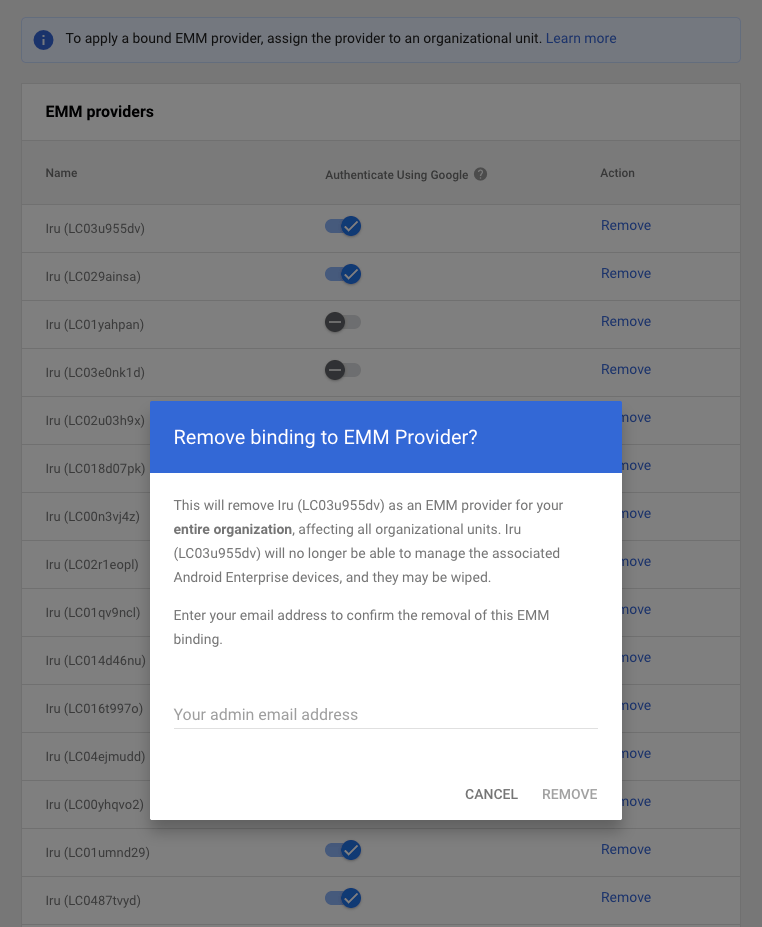
Do not disconnect from Google Admin. Removing Iru as your EMM provider in Google Admin (via Remove next to your EMM binding) disconnects the integration outside of Iru Endpoint. After that, you may be unable to delete Android device records or remove the Android Enterprise integration from Iru Endpoint.
In Google Admin, do not click Remove next to your Iru EMM provider. The confirmation dialog below removes the binding for your entire organization. Associated Android Enterprise devices may be wiped.
Remove binding to EMM Provider dialog in Google Admin console — do not use this to disconnect Iru

Android Management Requirements

Before enrolling Android devices, ensure you have completed the Prerequisites above and have:
  • Android Enterprise configured in Iru Endpoint (completed in this guide).
  • Blueprint configured for Android devices.
  • (Recommended) Single sign-on (SSO) configured for secure authentication.

Android Management Capabilities

Iru Endpoint provides the following Android management features:
  • Work profile management for company-owned devices.
  • Application deployment and management.
  • Policy enforcement and compliance monitoring.
  • Security configuration and updates.
  • Device inventory and reporting.

Considerations

  • Account Owner required: Only the Account Owner can configure Android Enterprise.
  • Google Admin access: You need admin access to the Google Admin console.
  • Factory reset required: Devices must be in factory reset state for enrollment.
  • Work profile only: Iru Endpoint supports company-owned work profile management.
  • Disconnect through Iru: Remove the Android Enterprise integration from Iru Endpoint, not from Google Admin. See Disconnecting Android Enterprise.
For detailed information about Android enrollment, see Configuring Android Enrollment and User Experience with Android Enrollment.

Next Steps

After configuring Android Enterprise:
1

Configure Blueprints and Library

Create and configure Blueprints so policies and apps are ready before enrollment. See Configuring Blueprints and Managing Library.
2

Enable other platforms (optional)

To manage Apple or Windows devices as well, see Apple Setup or Windows Setup.
3

Set up enrollment for each platform

Once Blueprints are configured, set up enrollment: Android Enrollment, Apple Enrollment, or Windows Enrollment.