

About Passport with Microsoft Entra ID Web Login
Passport with Microsoft Entra ID Web Login signs users in through a web view of your organization’s Microsoft Entra ID sign-in page, so Conditional Access and MFA can run at login. For Mac Login (username and password at the Mac login window without that web view), use Configure Passport with Microsoft Entra ID - Mac Login.How It Works
Passport integrates with your Microsoft Entra ID tenant at the macOS login screen. In Web Login mode, users complete Entra ID sign-in (including MFA when required) in that web view before the local Mac session is created or updated.Prerequisites
- Access to a Microsoft Entra ID admin account that can grant the Passport app the correct permissions.
- For MFA settings in Microsoft Entra ID, see Microsoft’s MFA configuration guide.
- Microsoft Entra ID
- Iru Endpoint
 Iru Endpoint
Create the App Registration
Sign in to Microsoft Entra admin center
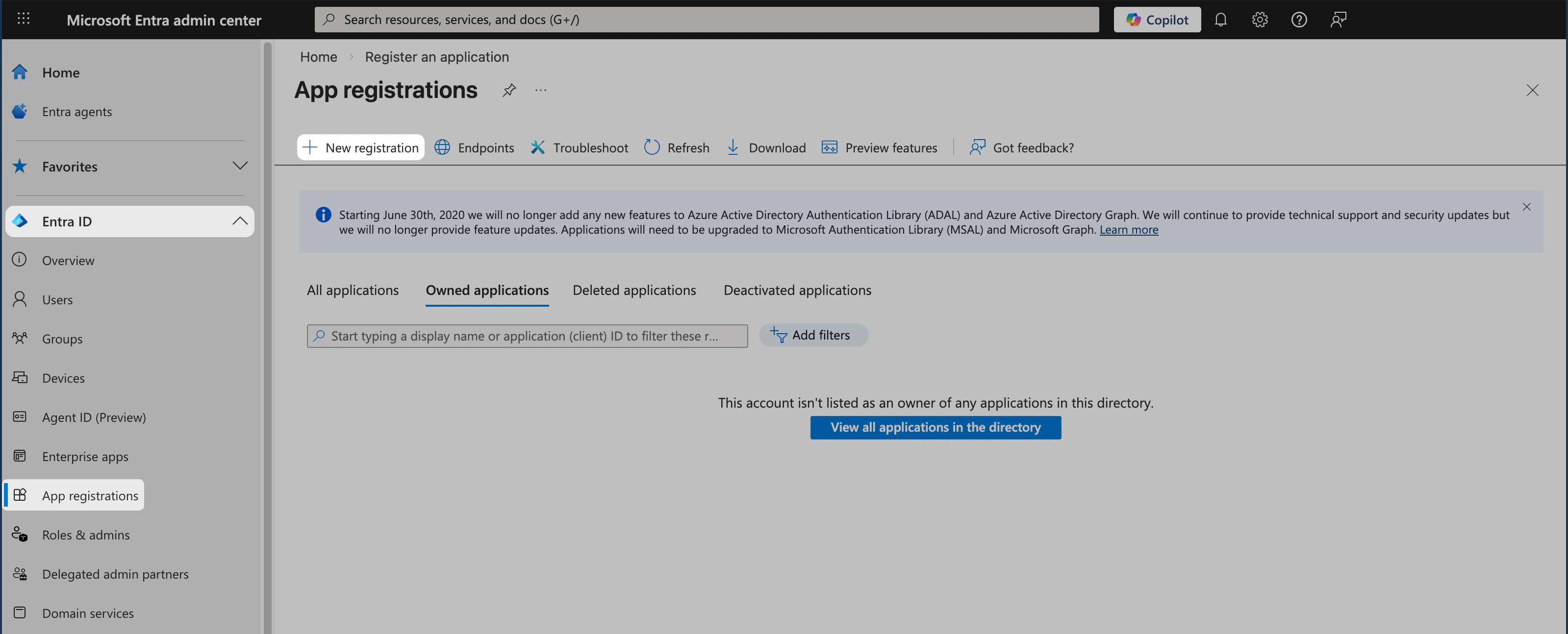
Access App registrations
Start new registration
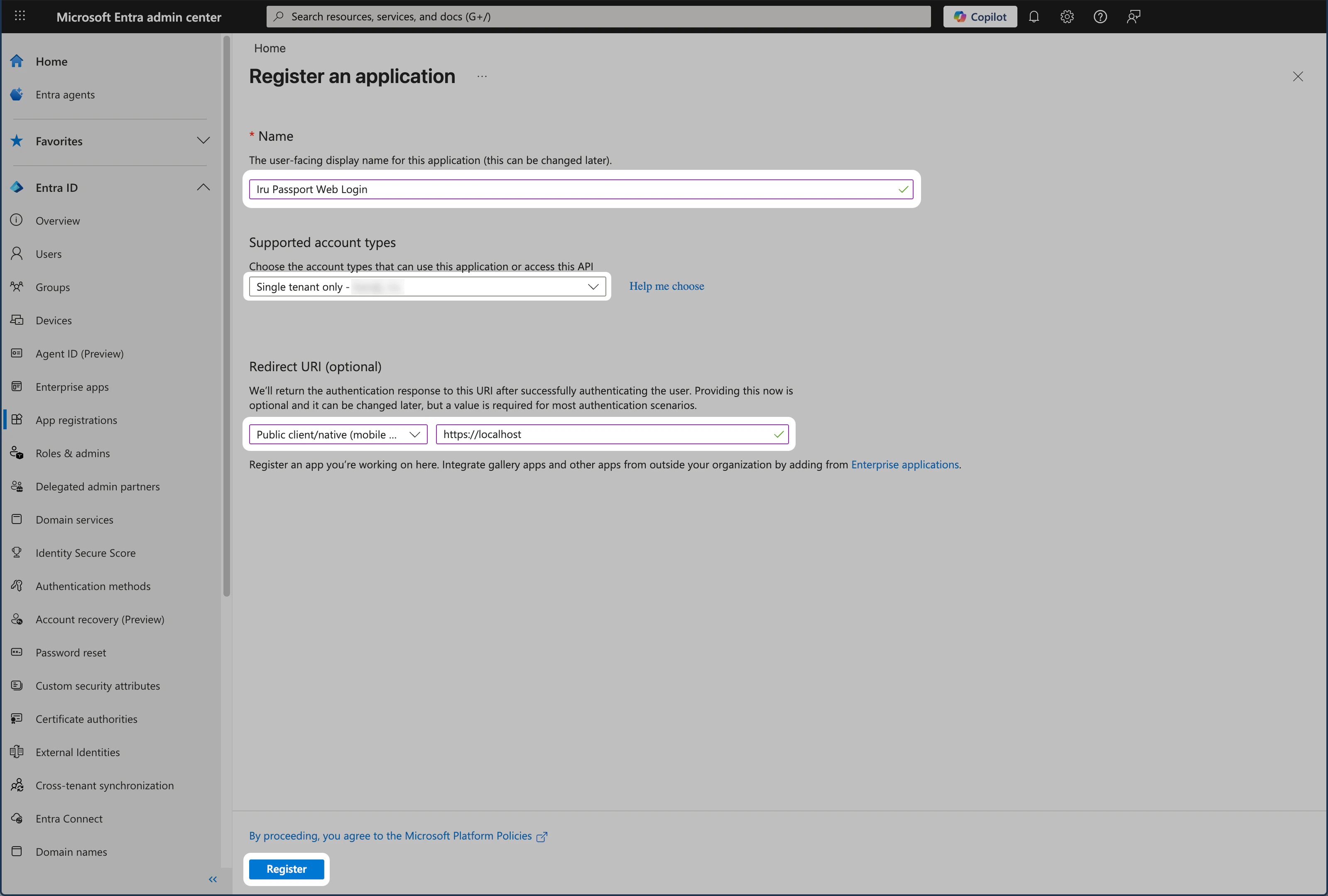
Set application name
Set supported account types
Set Redirect URI platform
Enter redirect URI
https://localhost. You will use this redirect URI when you configure the Passport Library Item.Complete registration
Collecting Configuration Details
Open a secure text document where the values for this OIDC app can be temporarily stored. You will need these details when you configure the Passport Library Item.Overview Pane
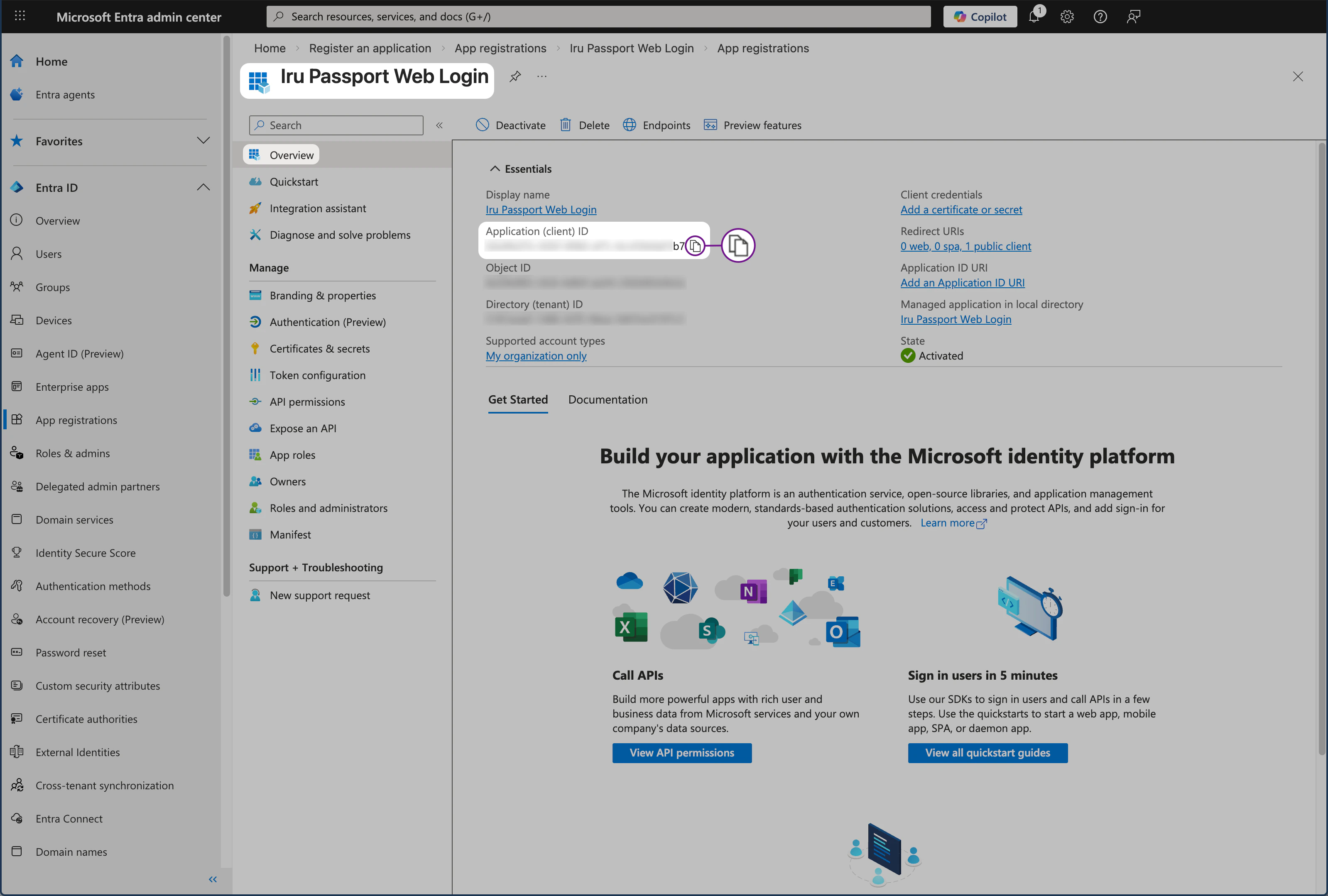
Copy the application (client) ID from the app’s overview. You will need it for the Passport Library Item.Open the Overview pane
Copy Application ID
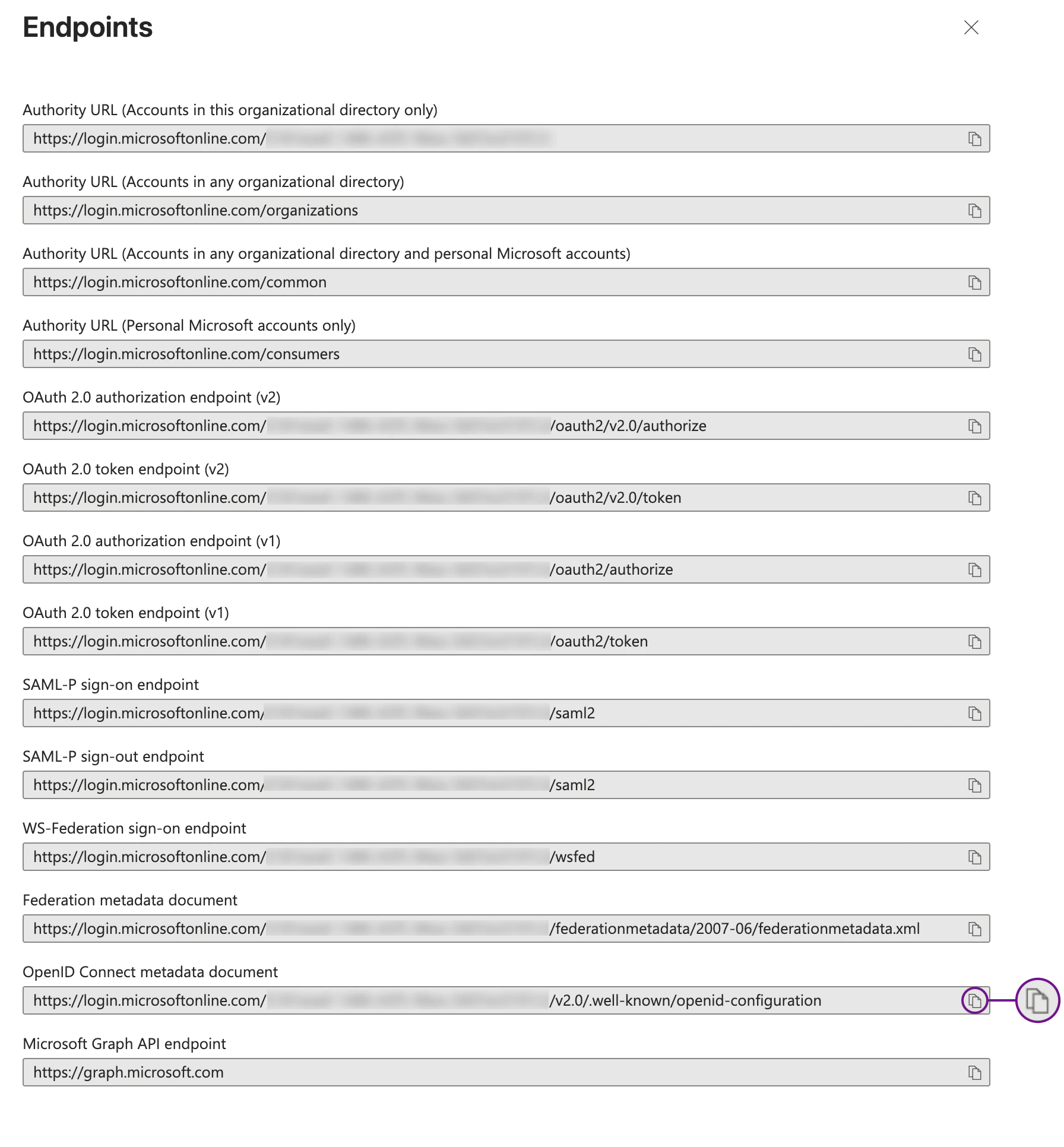
Endpoints Pane
Copy the OpenID Connect metadata URL from Endpoints; this is the identity provider URL Passport uses to discover sign-in and token endpoints.Open the Endpoints pane
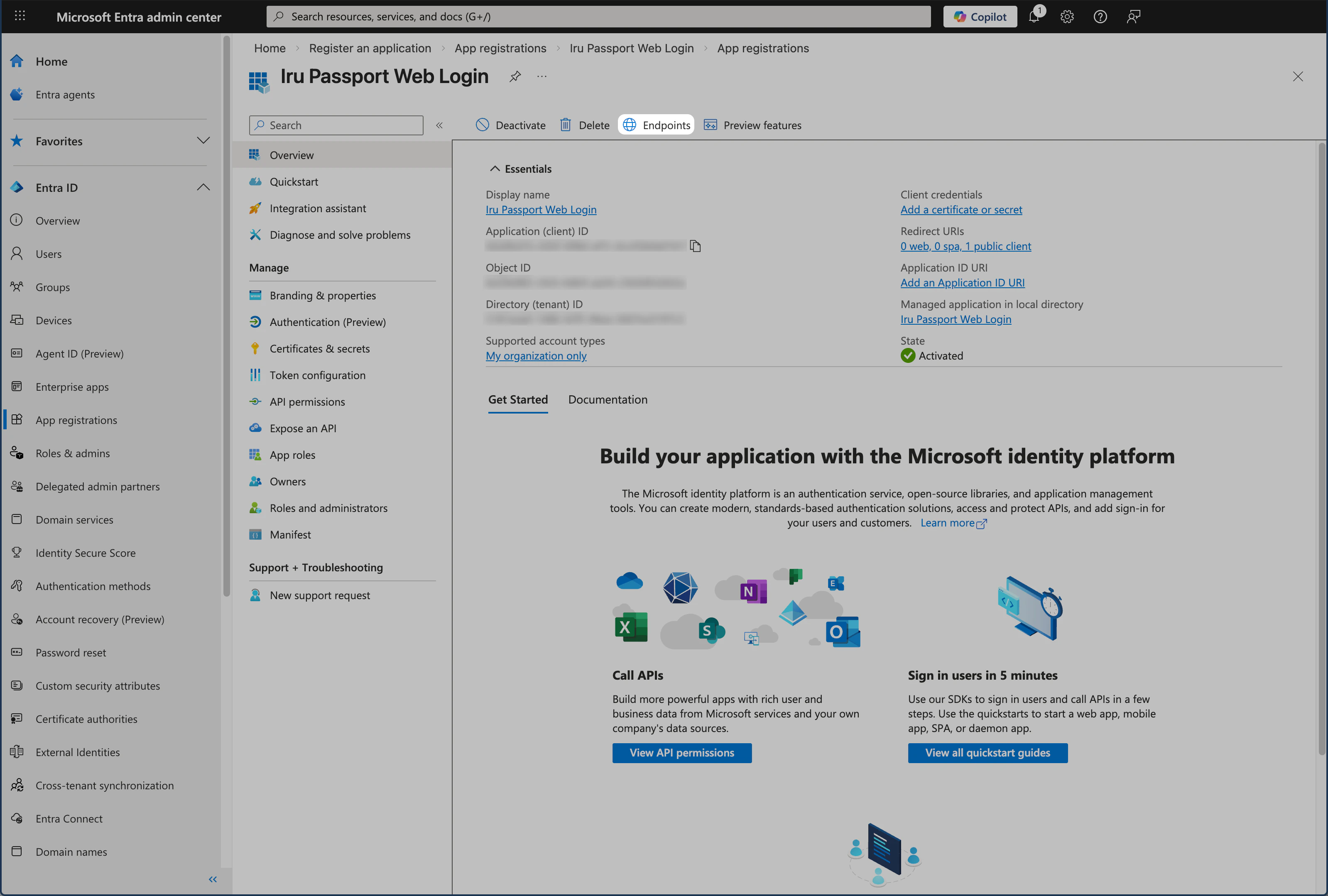
Copy Identity provider URL
Close Endpoints
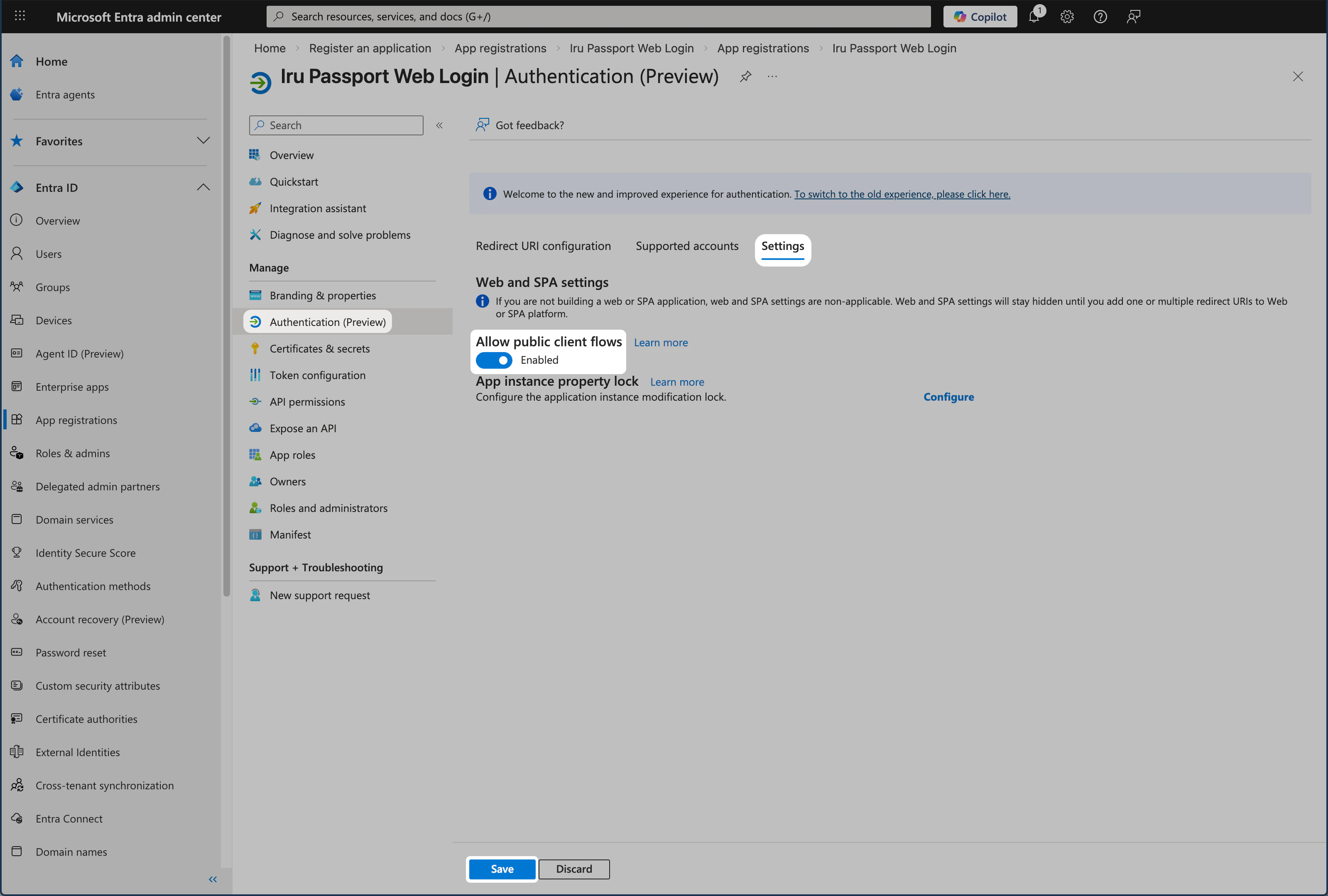
Authentication (Preview) pane
Enable public client flows so the Mac app can complete the sign-in flow without a client secret.Open the Authentication (Preview) pane
Open Settings
Enable public client flows
Save authentication settings
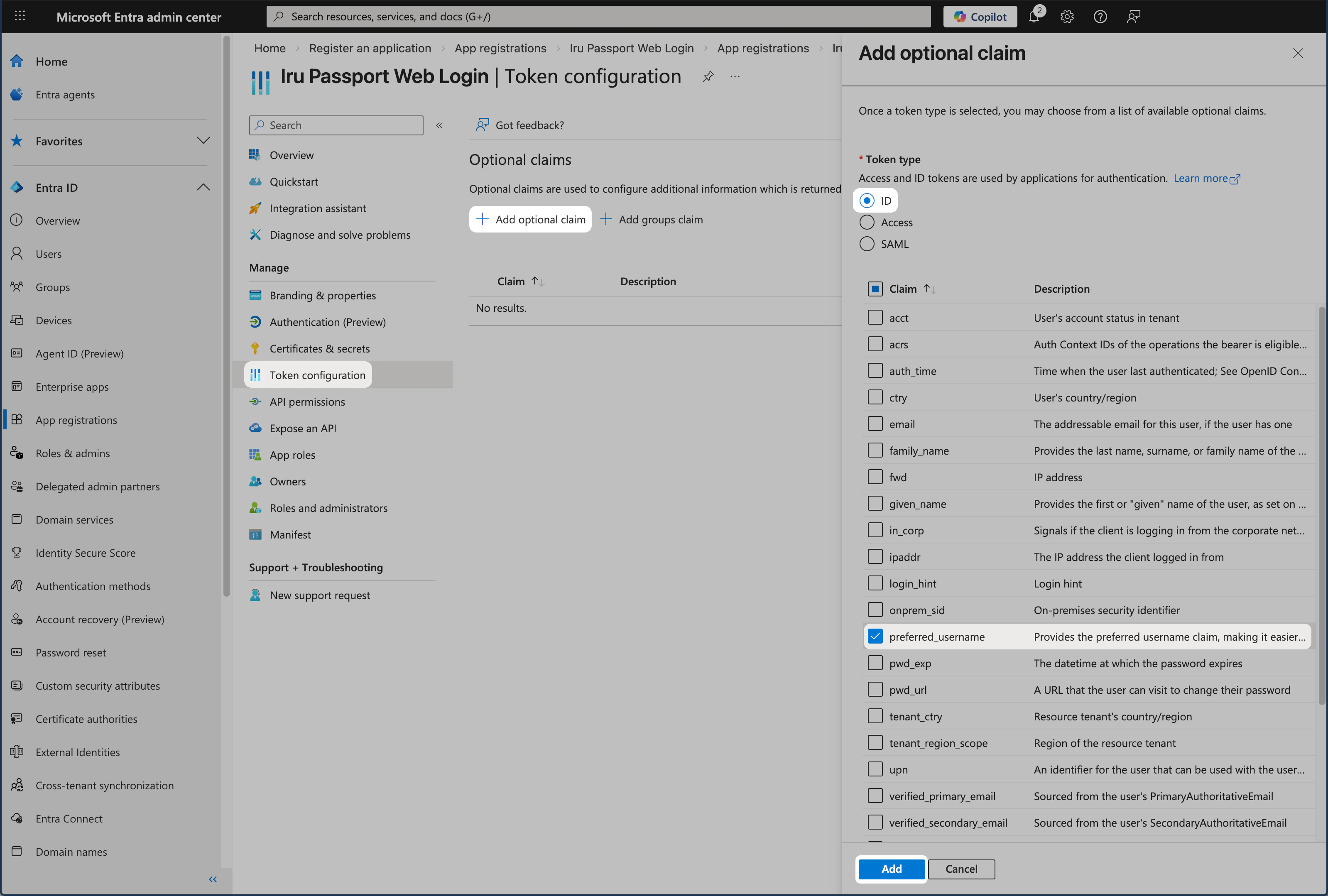
Token Configuration Pane
Add the required claims so the token includes the username and group membership Passport needs.Open the Token configuration pane
Add optional claim
Select token type
Select claim
Add the claim
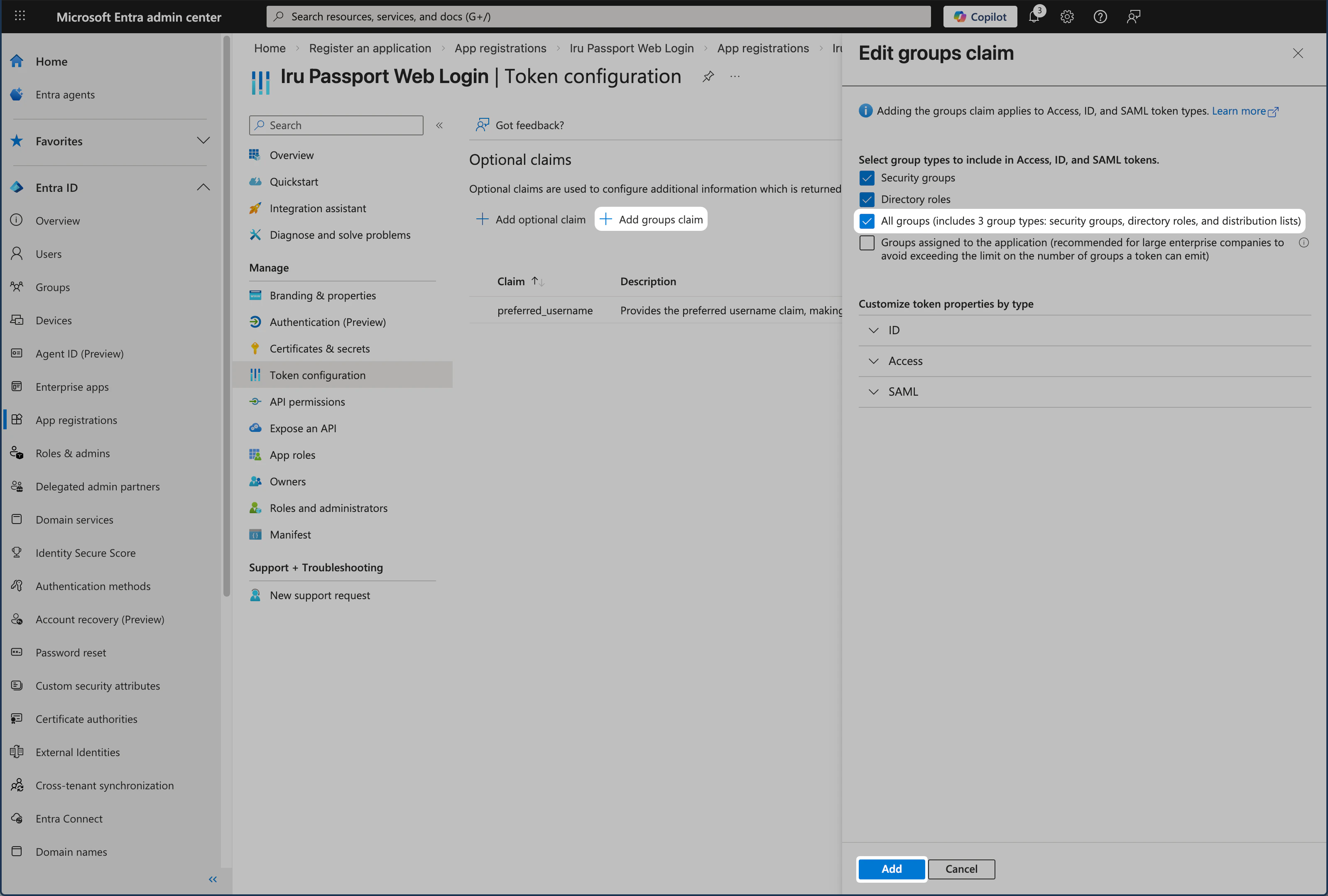
Add groups claim
Select groups
Confirm groups claim
API Permissions
Add the Microsoft Graph permissions Passport needs (email, profile, User.Read) and grant admin consent so users can sign in.Open the API permissions pane
Add permission
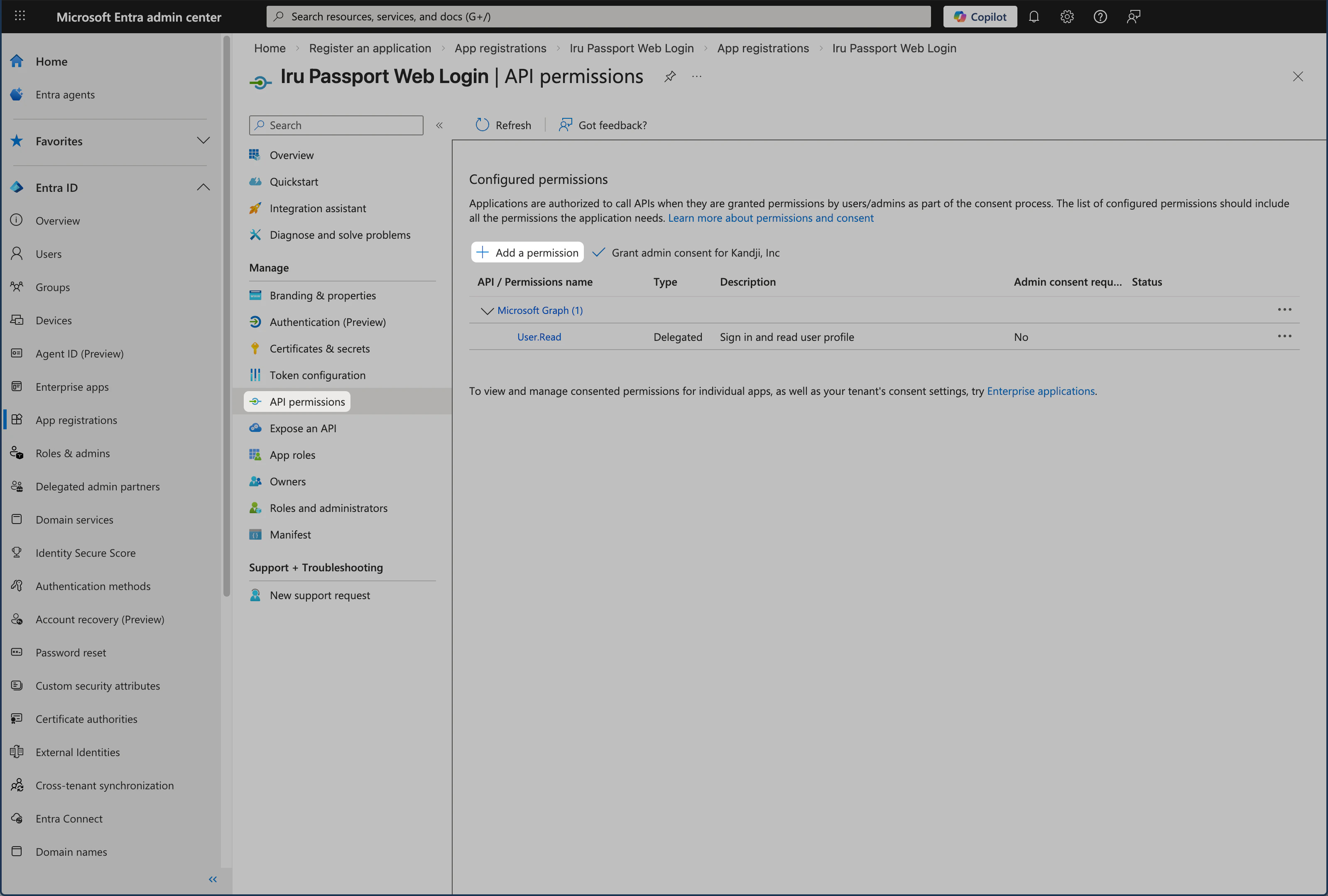
Select Microsoft Graph
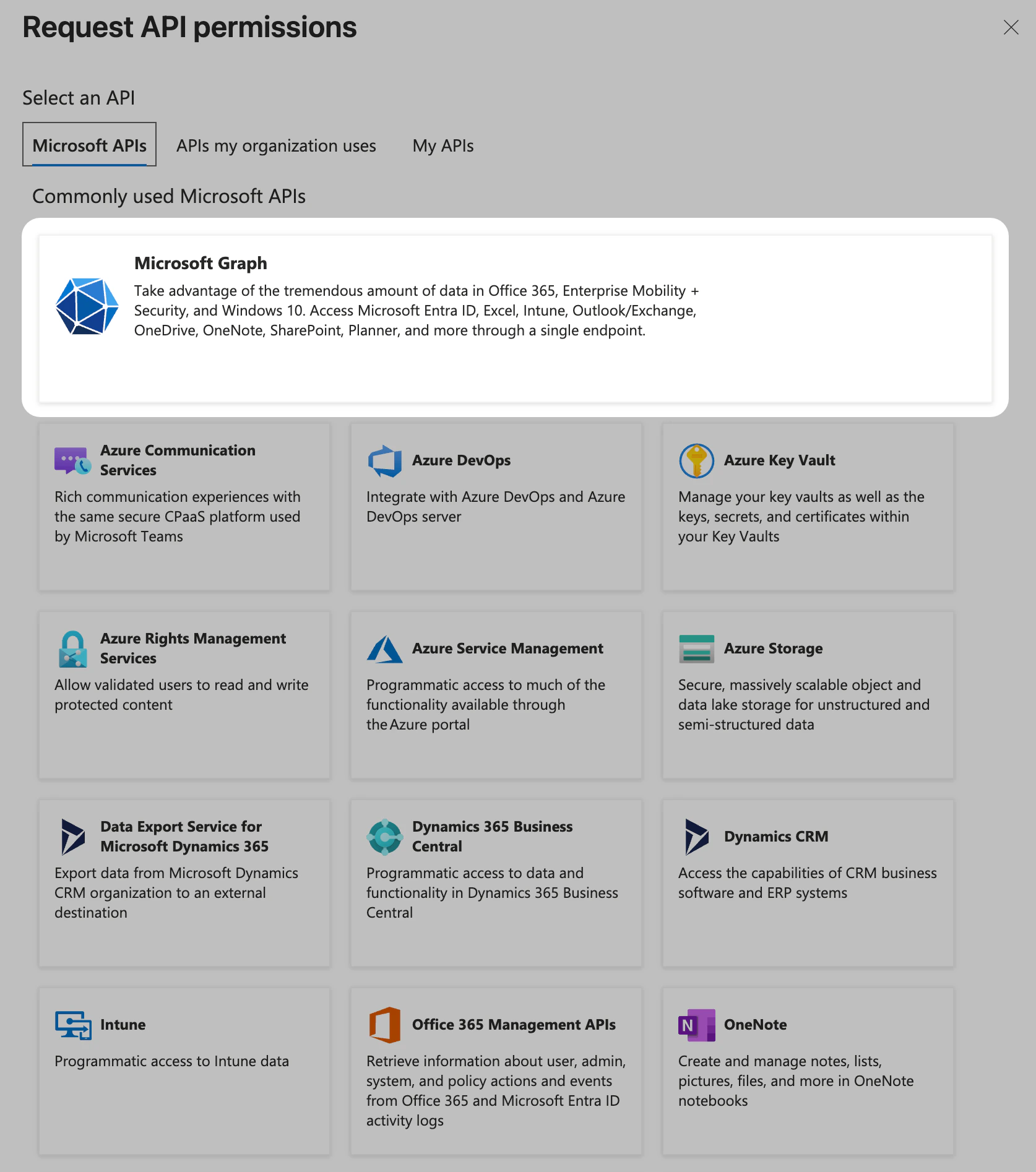
Select Delegated permissions
Expand OpenID permissions
Select email and profile permissions
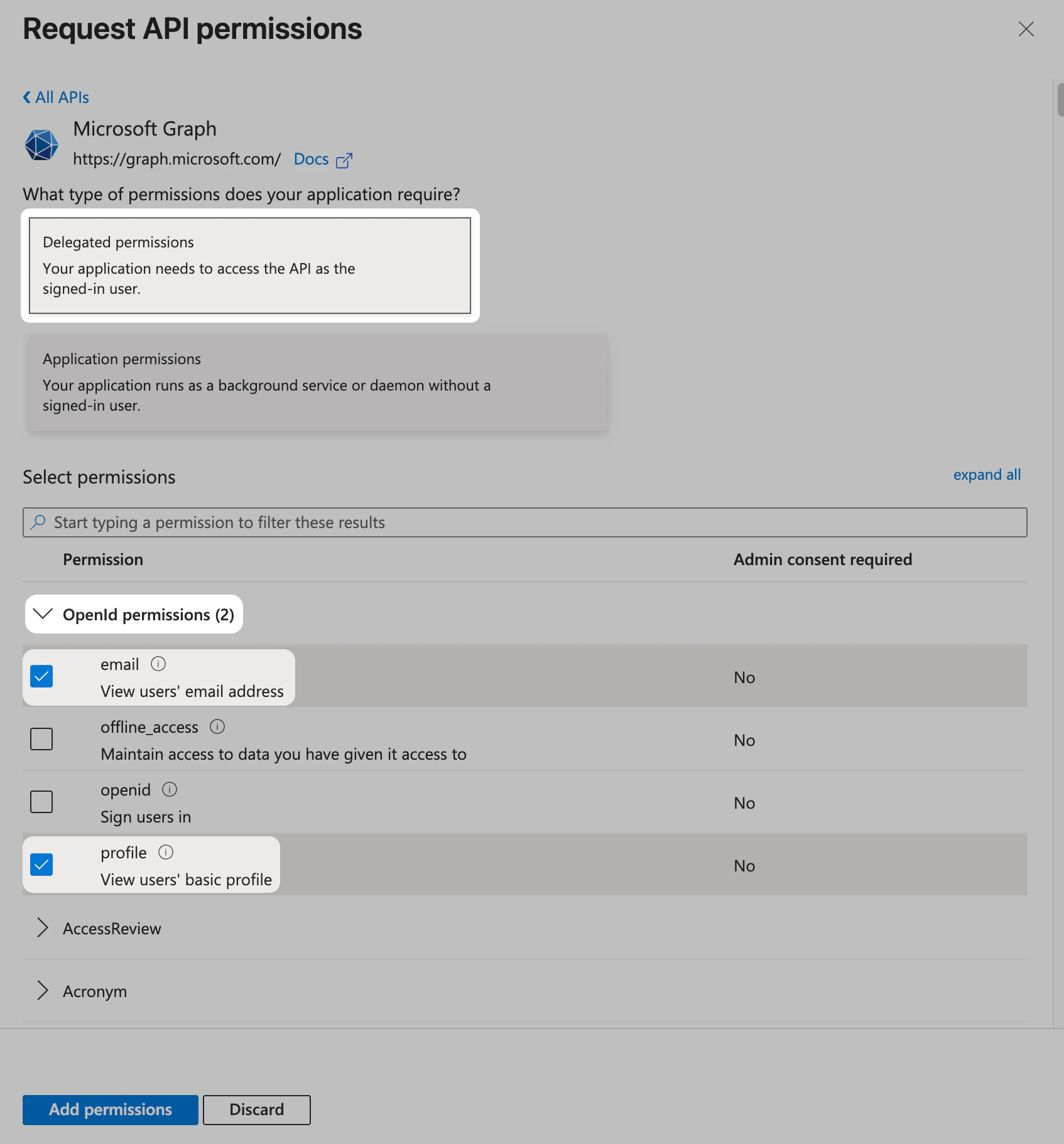
Search for User.Read
Confirm User.Read selection
Add permissions
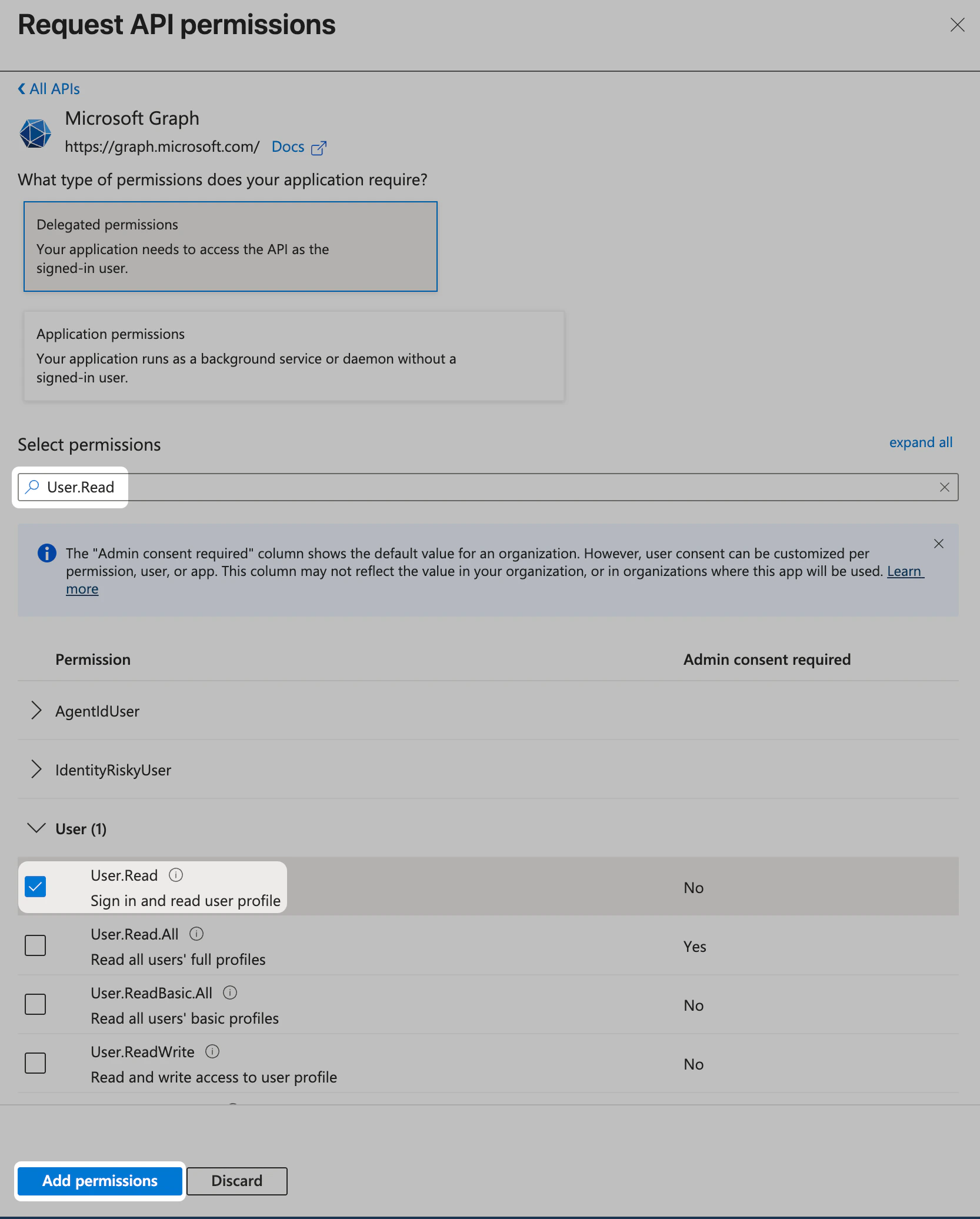
Grant admin consent
Confirm admin consent
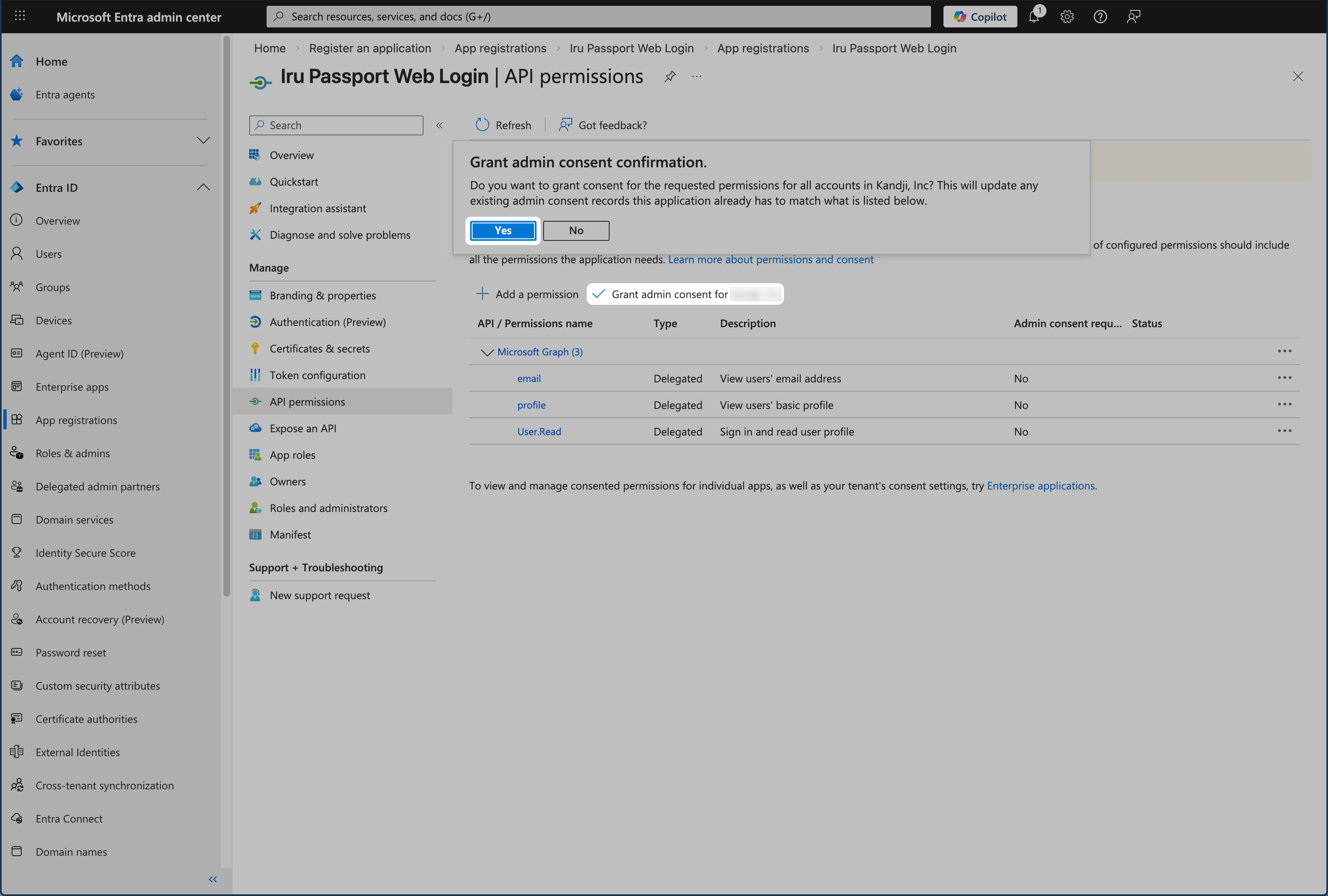
Verify permission status

Assign Users and Groups
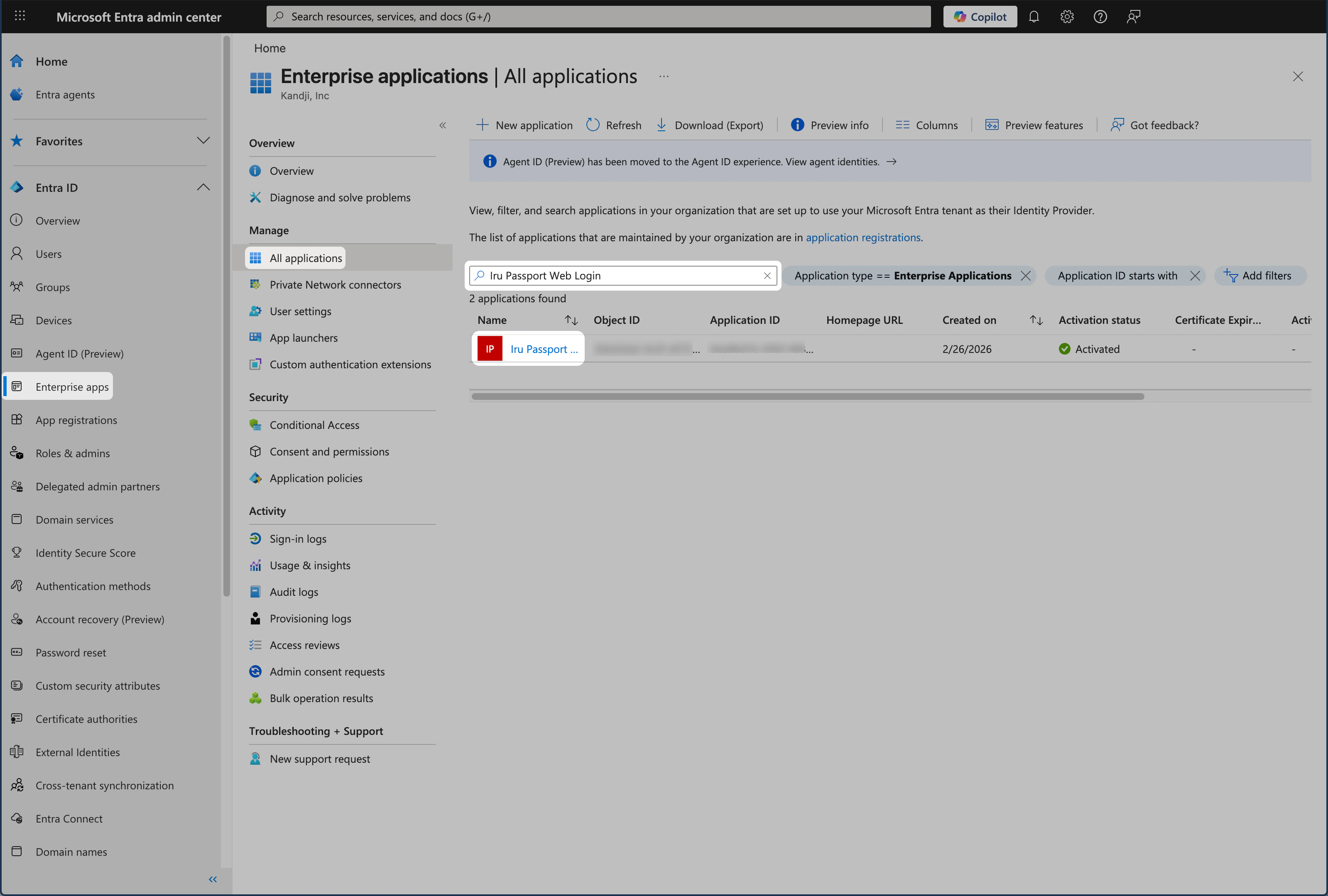
Configure who can use the Passport app and whether it appears in the user portal. By default, all users in Entra ID can use the app; the steps below cover the Properties settings and assigning users or users and groups when required.Access Enterprise Applications
Select Passport application
Open the Properties pane
Add logo (optional)
Check assignment requirement
- No: You will not need to assign users or users and groups.
- Yes: You will need to assign users or users and groups.
Configure visibility
Save properties
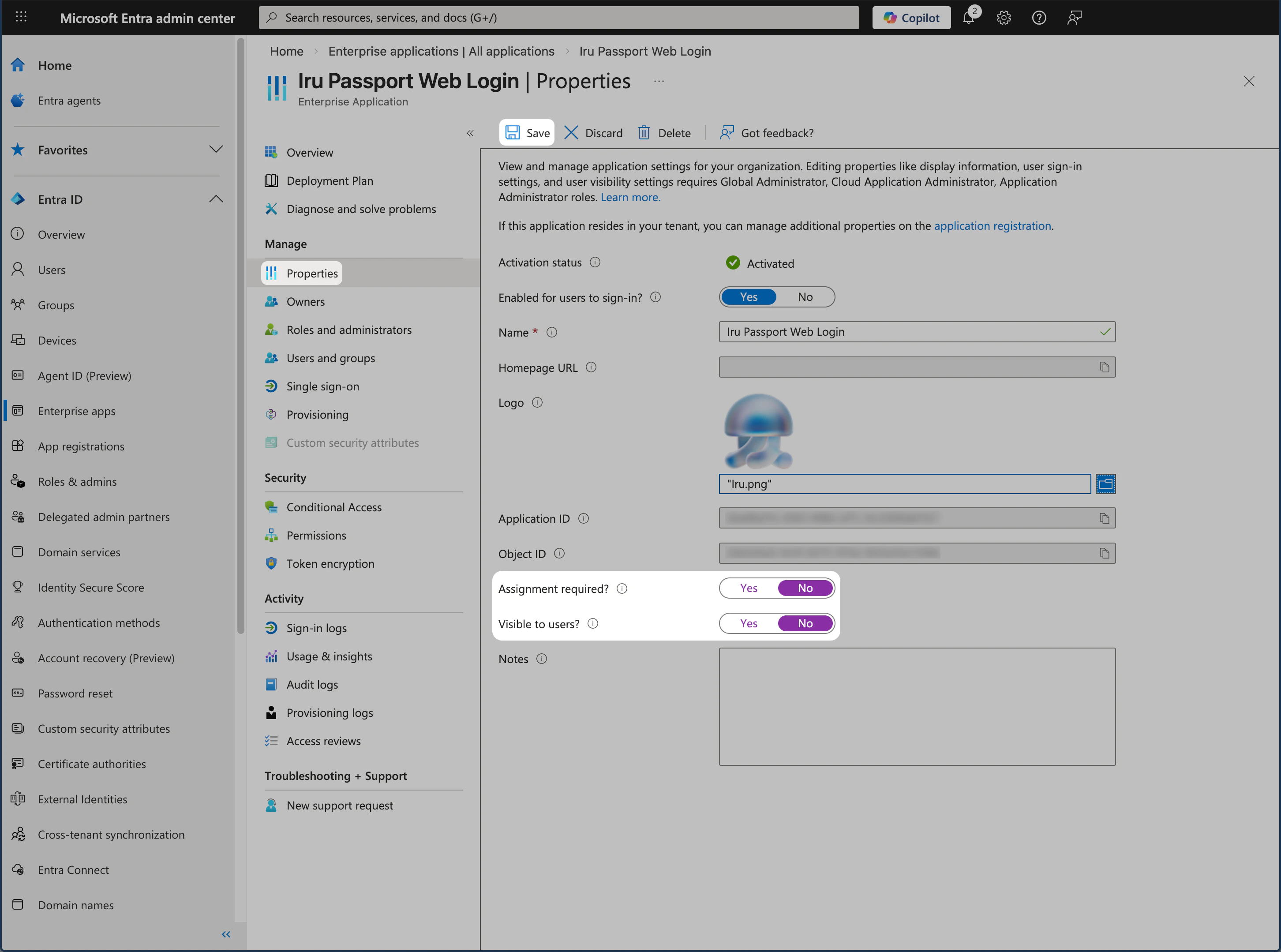
Assignment Required
If your Passport Enterprise application has Assignment required? set to Yes, follow the steps below to assign users or users and groups.Open the Users and groups pane
Add user or group
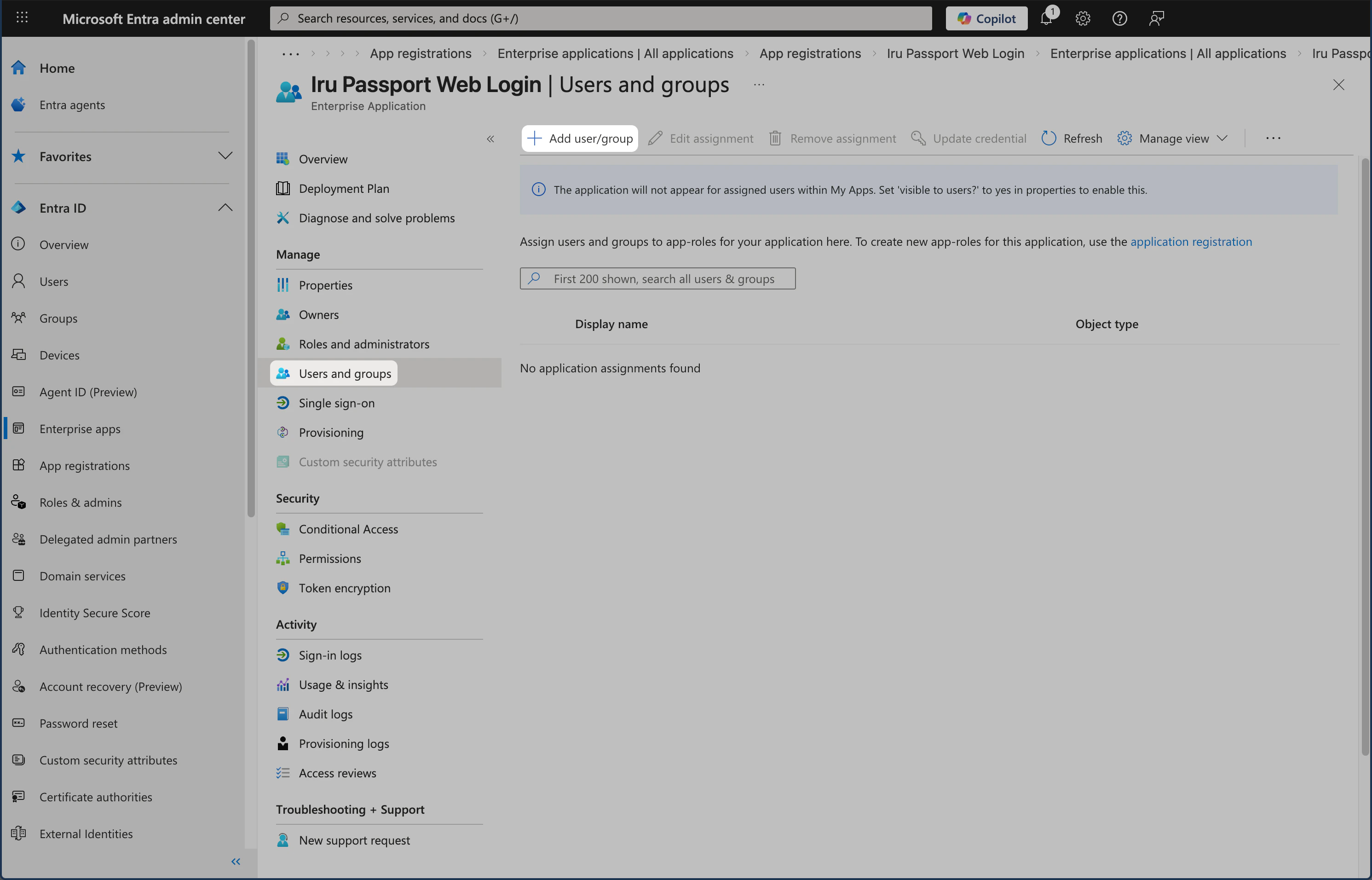
Select users and groups
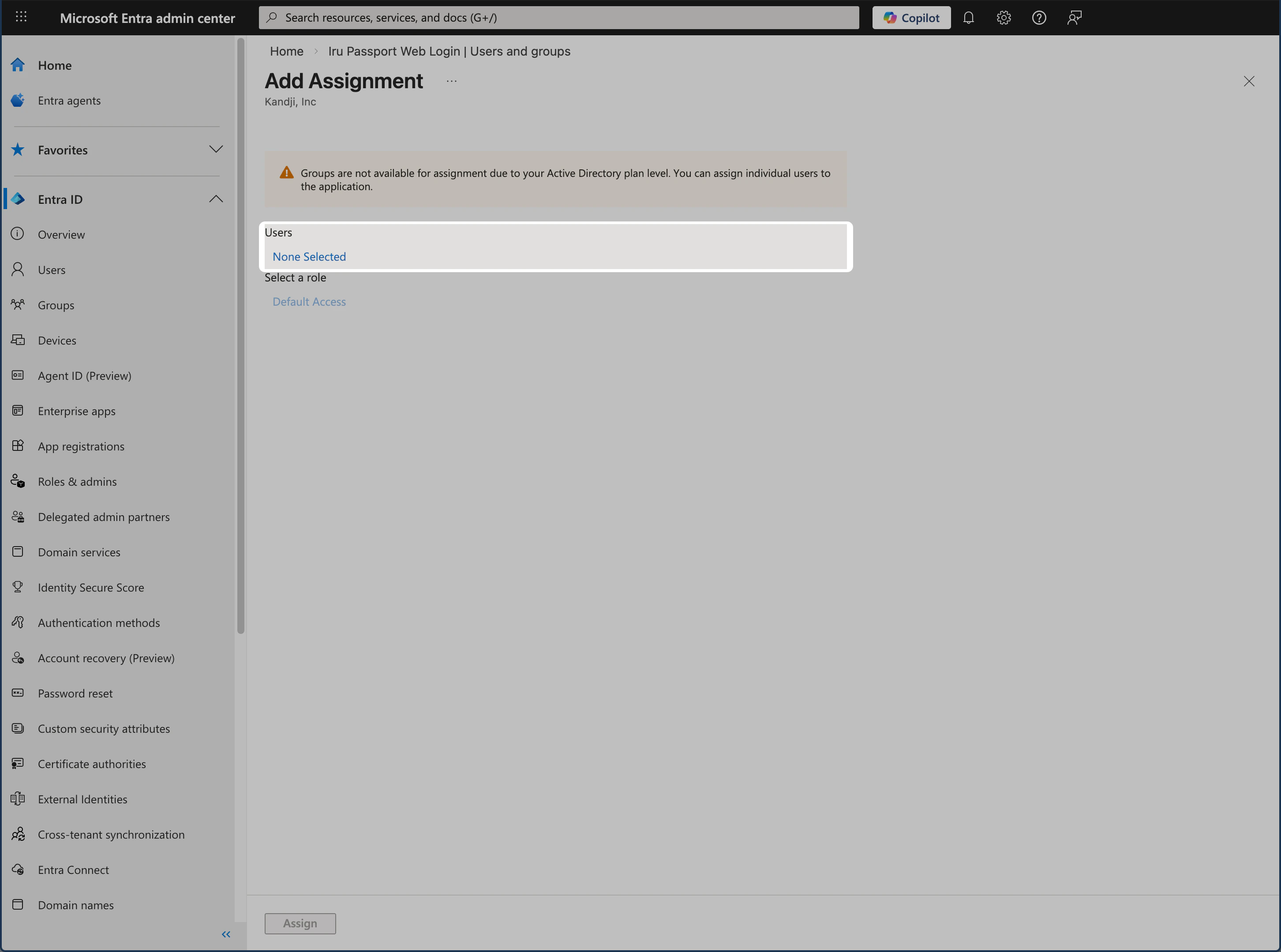
Choose users or users and groups
Confirm selection
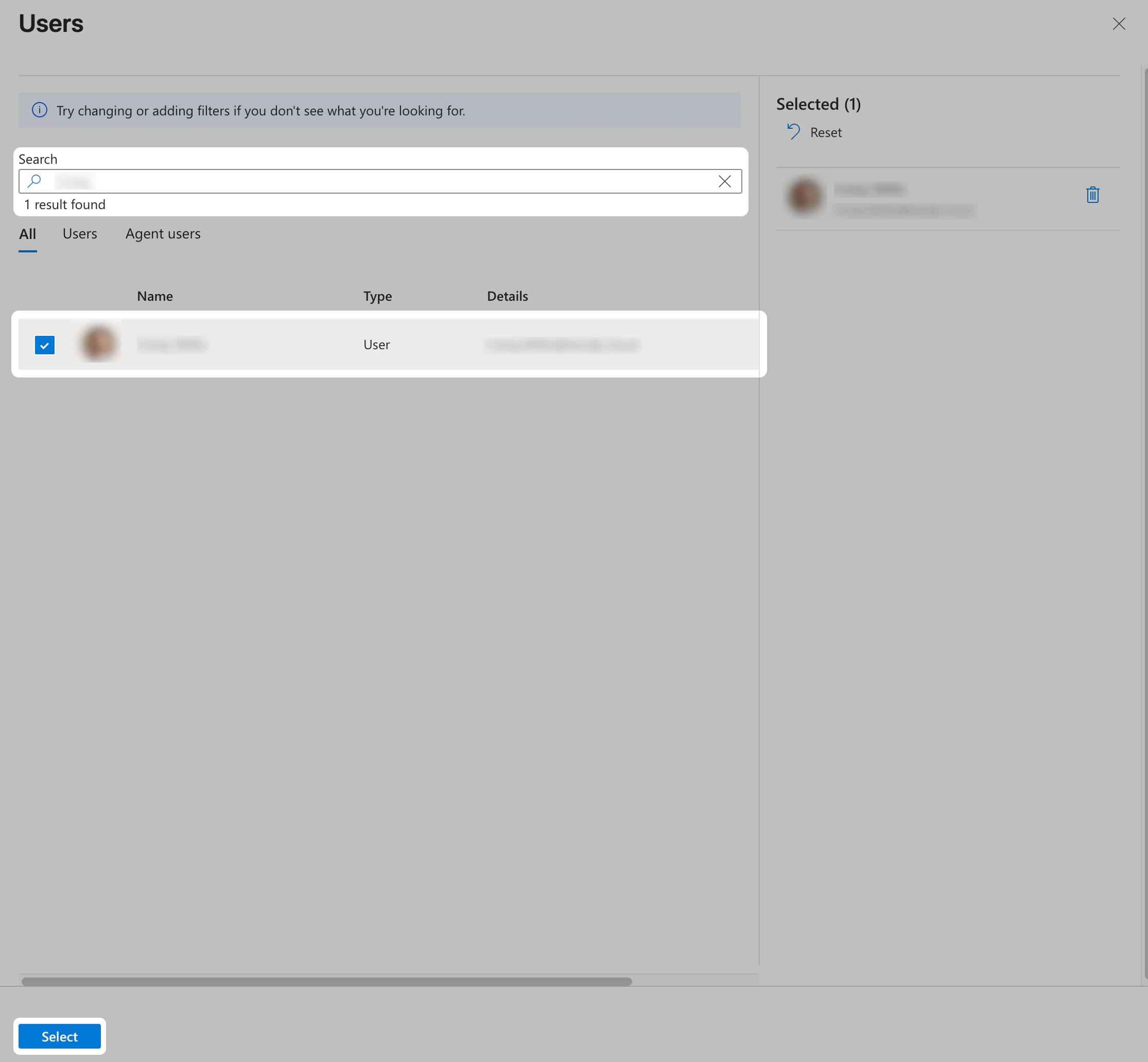
Complete assignment
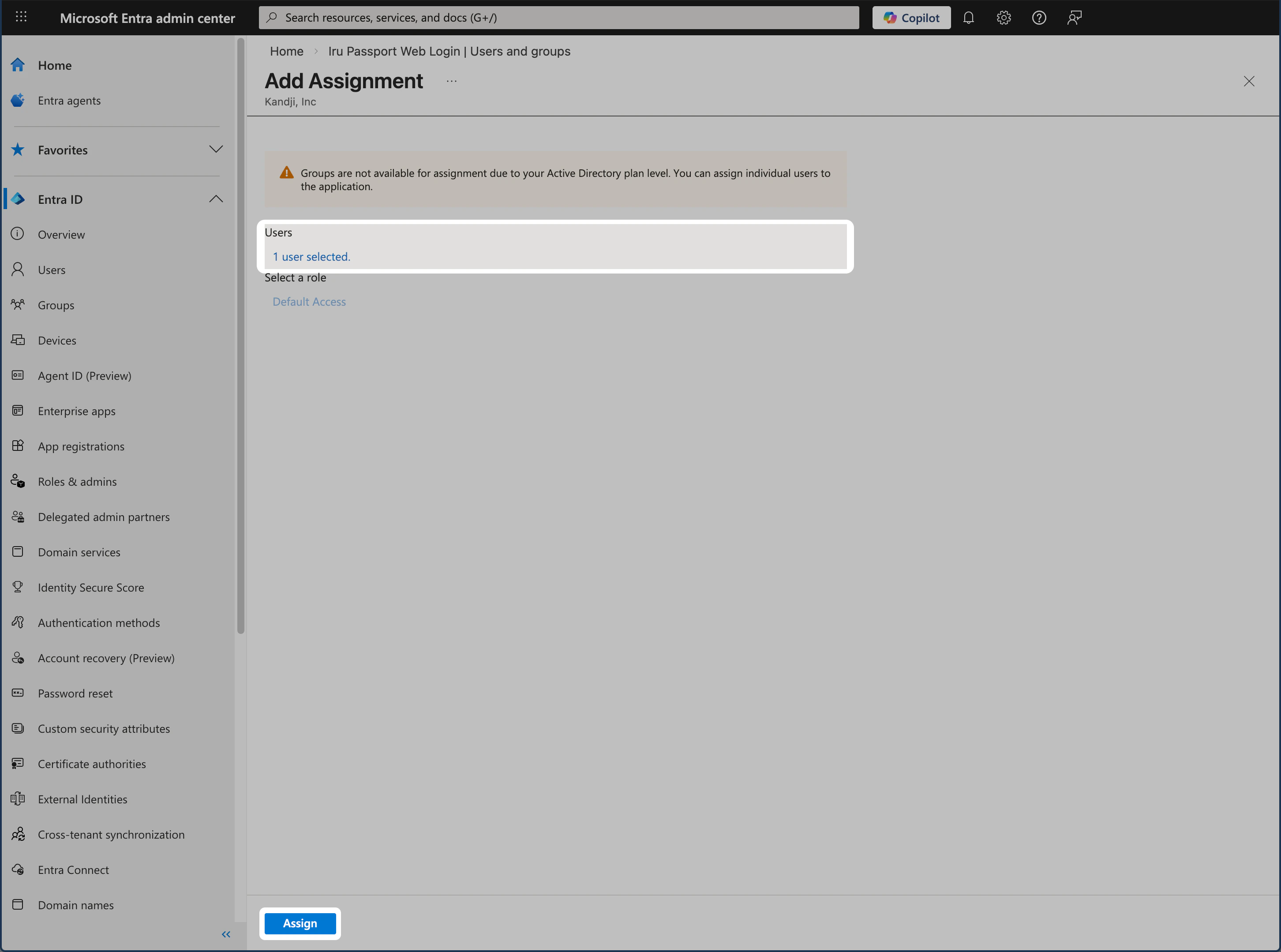
Verify assignment

Microsoft Entra ID Conditional Access Considerations
Complete the steps below to register Passport - CA Policy API, add its scope to your Passport app, and exclude that app from applicable policies. Skip this section if you do not use Conditional Access. When you finish, add the scope under Additional scopes (optional) in Authentication Mode on the Iru Endpoint tab.Passport Web Login completes Conditional Access challenges such as MFA in the Passport web view at login.Create the Passport - CA Policy API application
Create this application registration so Passport can request a scope beyond baseline scopes.Open App registrations
Register the application
Grant admin consent for Microsoft Graph
Expose an API
Add a scope
Set Application ID URI
api://cca588ed-dfe6-4fb4-b695-abfa23b6475a). The default is fine. Select Save and continue. You do not need to copy this URI; copy the scope URI in Copy the scope URI below.Configure the Passport scope
Passport without spaces or special characters. Leave Who can consent at the default. Enter a display name and description in the Admin consent fields, then select Add scope.
Copy the scope URI
api://cca588ed-dfe6-4fb4-b695-abfa23b6475a/Passport), select Copy. Save it for Add Additional scopes in Authentication Mode on the Iru Endpoint tab.Add the custom scope to your Passport app registration
Open your Passport app registration
Add API permission
Select Passport - CA Policy API
Add the Passport delegated permission
Grant admin consent
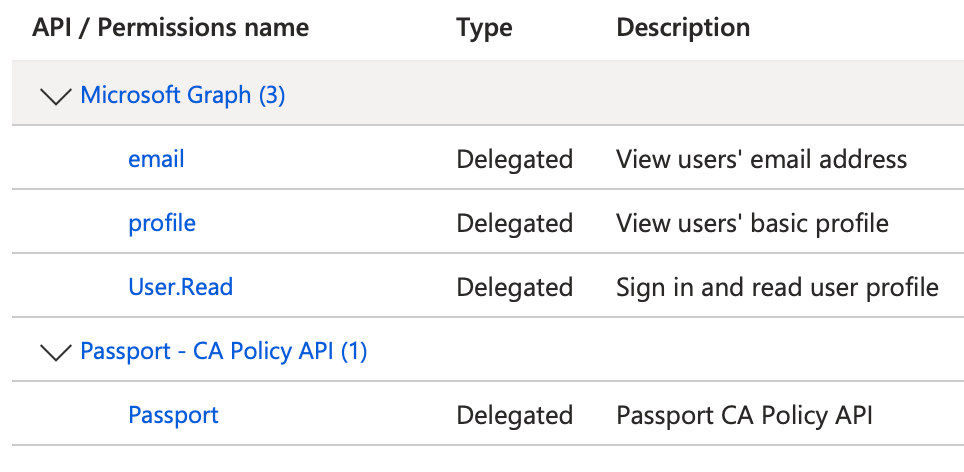
Exclude Passport - CA Policy API from All resources policies
Exclude Passport - CA Policy API from each policy scoped to All resources so password verification and synchronization continue to work.Open Conditional Access
Open a policy scoped to All resources
Exclude Passport - CA Policy API
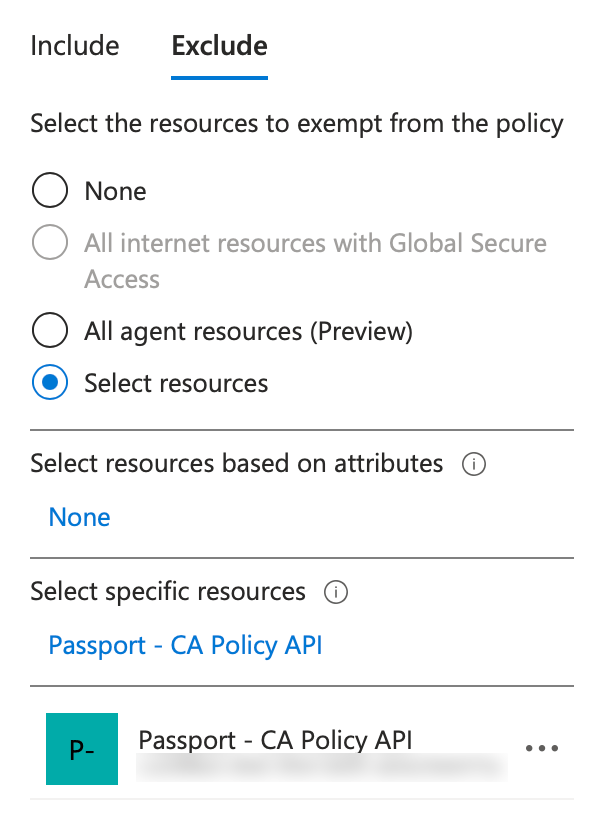
Repeat for each All resources policy
User account provisioning using Passport
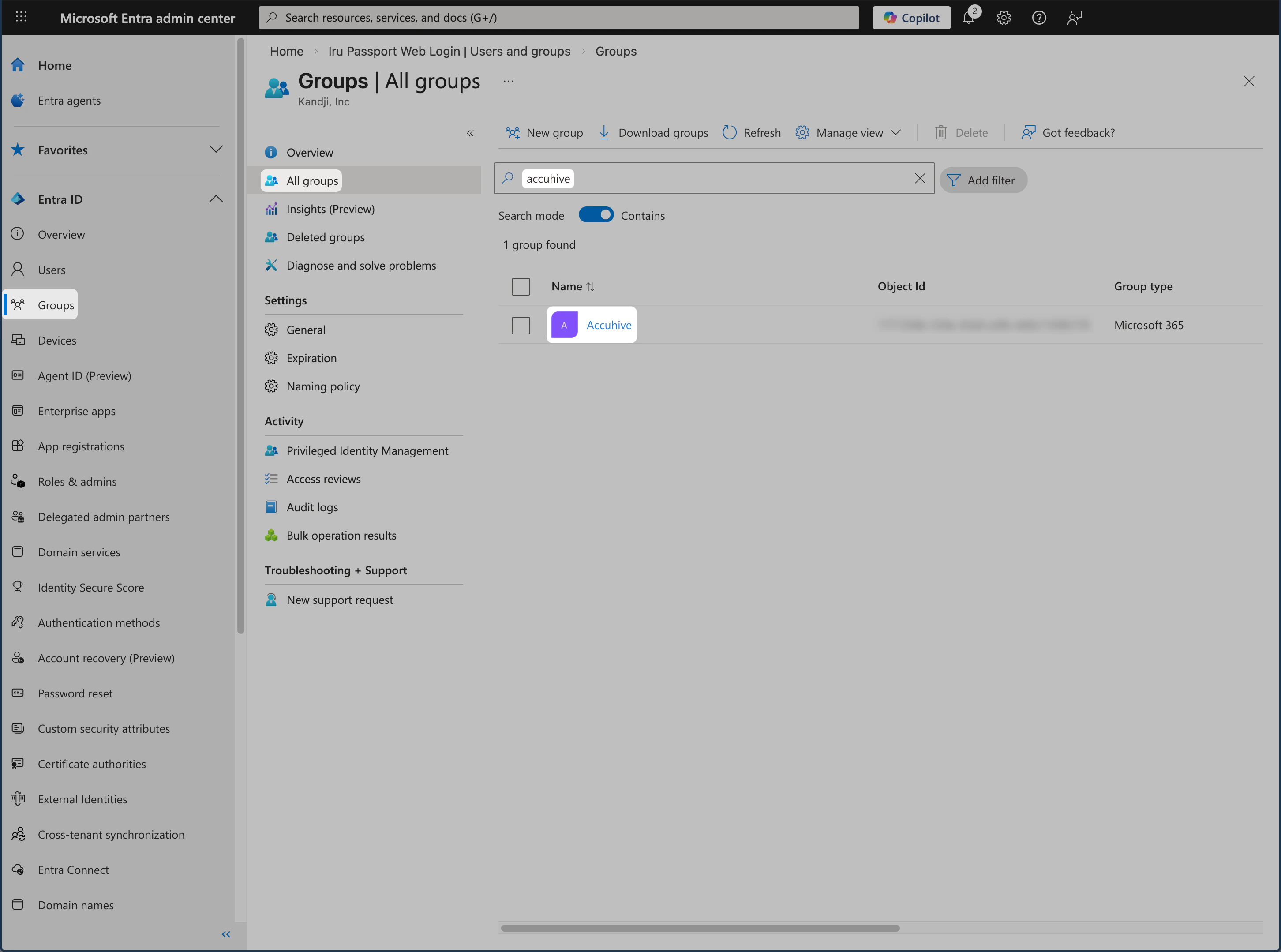
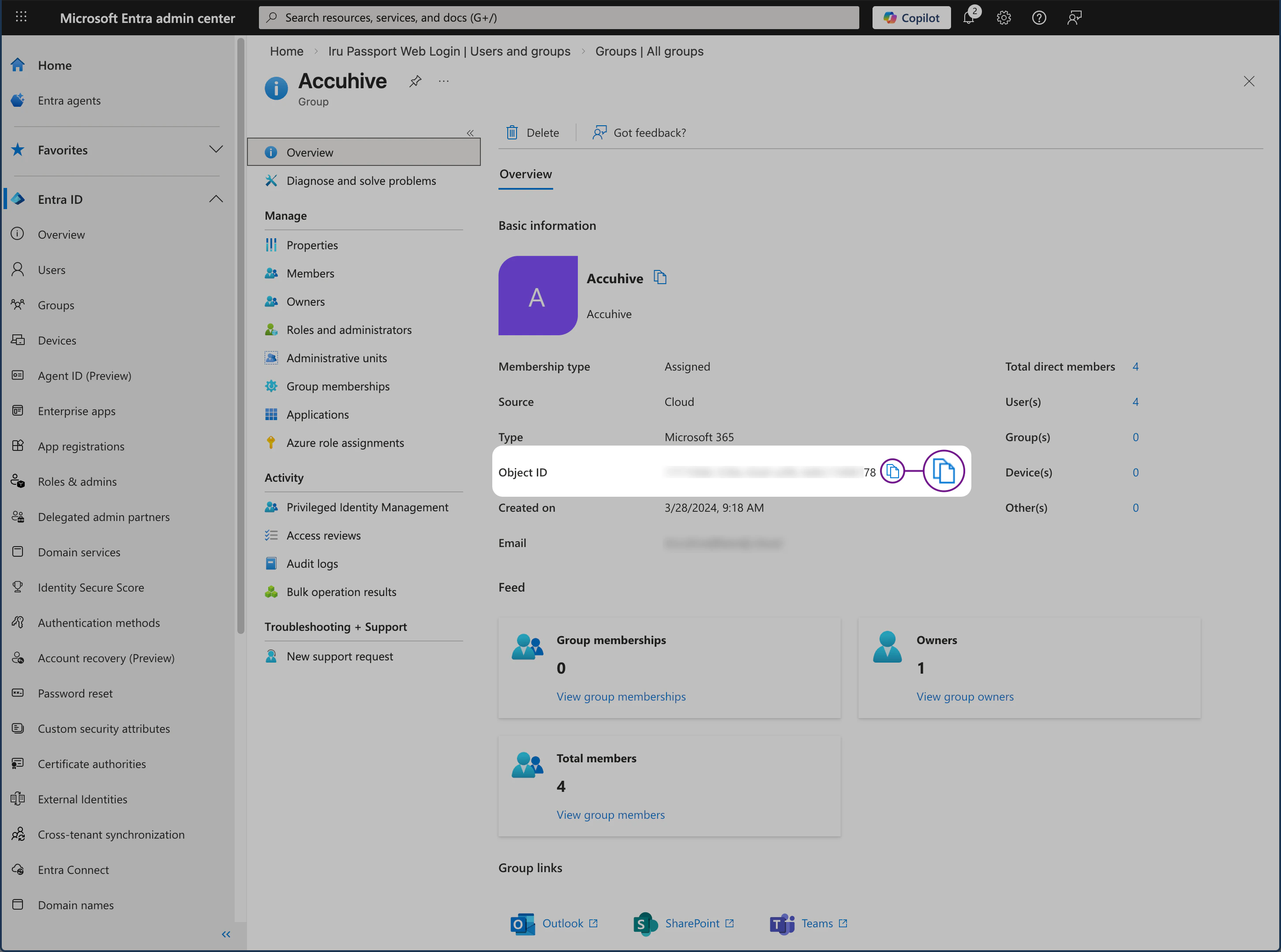
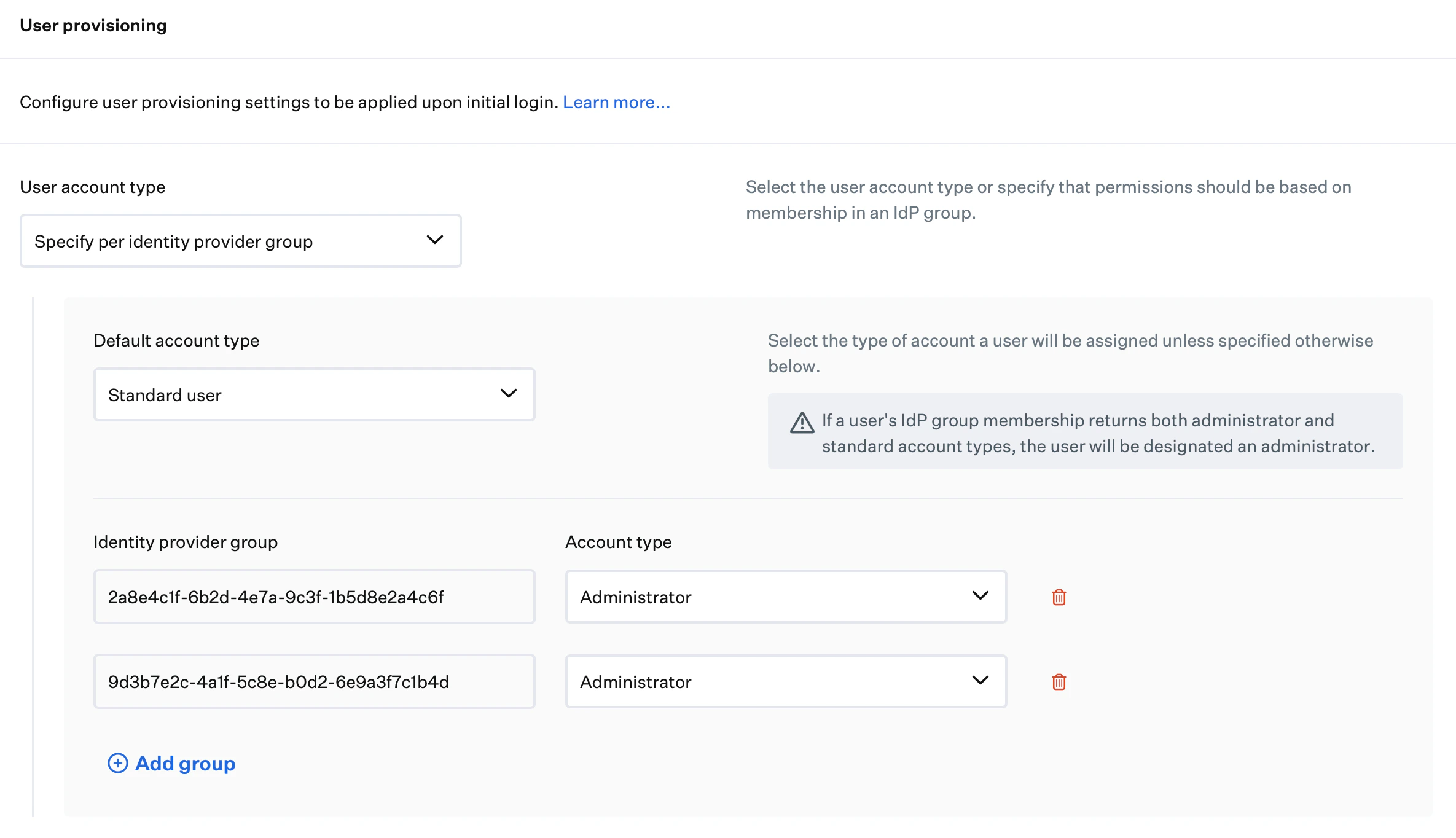
If you want Passport to set each user’s Mac account type from Entra ID security group membership, collect each group’s Object ID in the Microsoft Entra admin center using the steps in this section. You will use those values under User provisioning on the Passport Library Item Iru Endpoint tab. For more detail on this mode, see User provisioning in Configure the Passport Library Item.Access Groups
Select group
Copy Object ID
Repeat for additional Entra ID groups
Required Changes Before June 15, 2026
On June 15, 2026, Microsoft Entra ID starts enforcing Conditional Access more broadly for policies that target All resources (formerly All cloud apps) and include resource exclusions. Sign-ins that request only baseline scopes, includingopenid, profile, email, and User.Read, will be subject to those policies.
Passport Web Login requests those scopes as a public client. If you already use Passport Web Login, you need the steps below only when you want password verification and synchronization to work without MFA being enforced through Conditional Access on policies scoped to All resources (you exempt Passport from MFA instead of having users complete MFA during web sign-in). If users complete MFA in the Entra ID web view, you generally do not need the custom scope, Exclude Passport - CA Policy API from All resources policies, or the Additional scopes Library Item update; your tenant may still need the path under If you do not use Conditional Access policies. If you skip required updates, sign-in and password sync can break once the change reaches your tenant.
If you are configuring Passport Web Login for the first time using this article, the Microsoft Entra ID and Iru Endpoint tabs above already include these updates where they apply.
Read Enforcement for baseline scopes in Conditional Access for more detail.
If you skip these updates
If you do not prepare before June 15, 2026:- New users might not be able to sign in with Passport.
- Existing users might need to switch to local login after a reboot or logout.
- Password sync and state management can stop working.
- Microsoft Entra ID might record extra failed sign-in events.
If you do not use Conditional Access policies
If you do not use Conditional Access, or you want the old behavior across your tenant while you test:Register a placeholder application
Exclude the application from the relevant policy
Select the application in Baseline scopes settings
No Passport Library Item changes required
If you use Conditional Access policies
If you use Conditional Access with Passport Web Login and want to exempt Passport from MFA as described above, complete the steps below before June 15, 2026.Create the Passport - CA Policy API application
Open App registrations
Register the application
Grant admin consent for Microsoft Graph
Expose an API
Add a scope
Set Application ID URI
api://cca588ed-dfe6-4fb4-b695-abfa23b6475a). The default is fine. Select Save and continue. You do not need to copy this URI; copy the scope URI in Copy the scope URI below.Configure the Passport scope
Passport without spaces or special characters. Leave Who can consent at the default. Enter a display name and description in the Admin consent fields, then select Add scope.Copy the scope URI
api://cca588ed-dfe6-4fb4-b695-abfa23b6475a/Passport), select Copy. Save it for Update your Passport Library Item.Add the custom scope to your Passport app registration
Open your Passport app registration
Add API permission
Select Passport - CA Policy API
Add the Passport delegated permission
Grant admin consent
Exclude Passport - CA Policy API from All resources policies
Complete this step only when you use Web Login and want to exempt Passport from MFA through Conditional Access. Skip it if users complete MFA in the Entra ID web view at login. Policies scoped to All resources include sign-ins that use baseline scopes Passport requests at sign-in. Exclude Passport - CA Policy API so password verification and synchronization continue to work without an MFA requirement on those policies.Open Conditional Access
Open a policy scoped to All resources
Exclude Passport - CA Policy API
Repeat for each All resources policy
Update your Passport Library Item
Complete this step when you follow If you use Conditional Access policies because you exempt Web Login from MFA as described above.Open the Passport Library Item
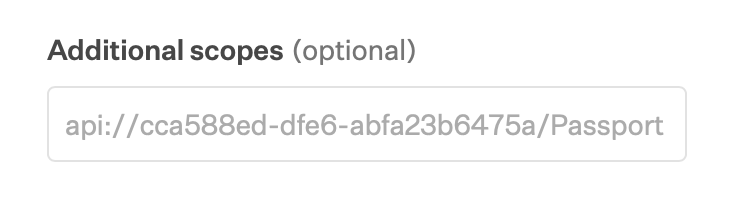
Add the scope URI
Repeat for other Passport Library Items